Complete Guide to Hornbill Festival 2025 | Dates, Events & Travel Tips
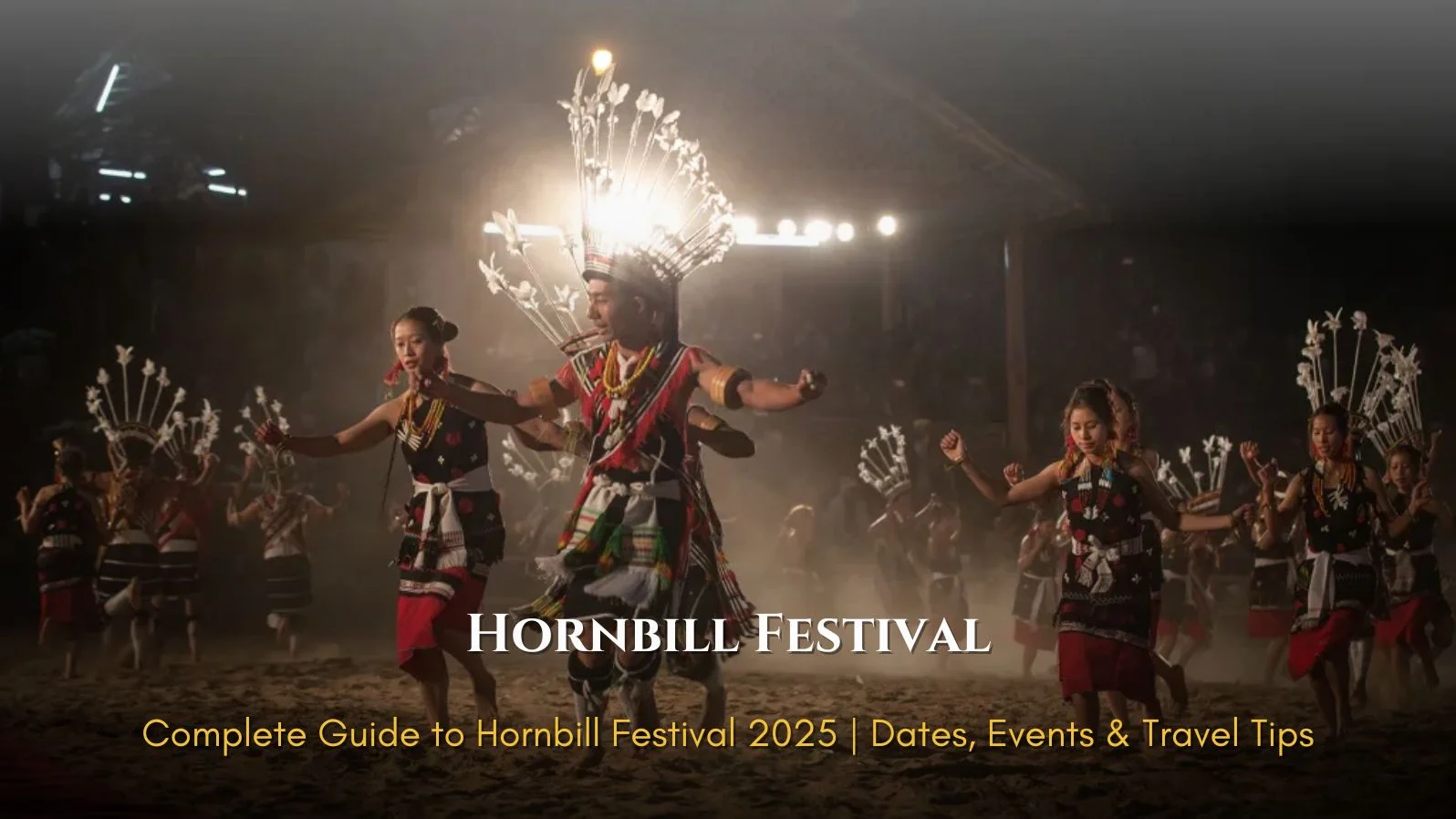
Northeast India is home to over 200 distinct tribes, each with its own language, traditions, attire, and ways of life. These indigenous communities celebrate through vibrant dances, folk songs, unique cuisines, and exhibitions of their daily livelihoods from agrarian practices and animal husbandry to handlooms and handicrafts. Festivals in this region are not just entertainment; they are windows into centuries-old customs, spirituality, and social bonds.
Among the many states of the Northeast, Nagaland stands out as one of the most culturally diverse. It is home to more than 16 major tribes and numerous sub-tribes, collectively known as the Nagas. The term “Naga” is an umbrella identity that spans across Northeast India and even into parts of Upper Burma (Myanmar). Historically, the Nagas were renowned as fierce warriors, defending their clans and territories with unmatched courage. Their culture places immense value on loyalty, kinship, and community bonds.
Despite modernization, the Naga people continue to live in close harmony with nature. Many traditional lifestyles, from terraced farming to bamboo craftsmanship, are still preserved. Each tribe also carries its own unique festivals, rituals, and folklore, making Nagaland a treasure trove of intangible cultural heritage.
To celebrate and preserve this diversity, the Government of Nagaland launched the Hornbill Festival in December 2000, now fondly called the “Festival of Festivals.” Held every year at Kisama Heritage Village near Kohima, the event brings together all the tribes of Nagaland on a single platform. Over ten days, visitors experience the essence of Naga culture traditional dances, folk songs, handwoven textiles, wood carvings, indigenous sports, tribal cuisines, and warrior reenactments.
The Hornbill Festival is not only a showcase for tourists; it is a cultural revival movement that keeps the younger Naga generations connected to their roots. For travelers, it offers a once-in-a-lifetime opportunity to witness this rare unity of tribes, all celebrating their shared identity while proudly expressing their distinct traditions.
Why the Hornbill Festival Is Celebrated
The Hornbill Festival was first organized in 2000 by the Government of Nagaland to protect, revive, and showcase the rich culture of the Naga tribes. The idea was to bring all the tribes under one platform so that their customs, dances, songs, and oral traditions could be preserved and shared with the world.
- The hornbill bird a revered species in many Naga tribal folklore symbolizes strength, courage, fertility, and cultural pride. Some tribes even use hornbill feathers in their headgear as a mark of honor.
- The festival is called the “Festival of Festivals” because it integrates multiple smaller tribal festivals into one grand event for easy exposure.
- Beyond celebrations, it’s also an effort to promote eco-tourism, peace, and unity among Naga tribes, while creating awareness about their sustainable ways of life.
Dates & Location of Hornbill Festival
Festival Dates: December 1 to December 10, 2025
Venue: Kisama Heritage Village (also called Naga Heritage Village), about 12 km south of Kohima, Nagaland
Venue Details: The site is constructed between the villages of Kigwema and Phesama. It hosts “morungs” (tribal dormitories) of all major Naga tribes, transformed into vibrant cultural zones during the festival.
Tickets & Entry Fees of Hornbill Festival
Entry Pass: ₹50–₹100 per person
(Note: Price may be vary )
What to Expect in Hornbill
The Hornbill Festival is often called the “Festival of Festivals” because it showcases the diversity of Nagaland’s tribes in a single, ten-day cultural fiesta. Expect a mix of traditional and modern performances, craft and food bazaars, indigenous sports, music concerts, and immersive tribal experiences.
Here’s a breakdown of the key components:
Cultural Performances & Tribal Showcases
Each day, tribal dance troupes from various Naga communities perform their signature dances from war dances to harvest dances, storytelling in motion, folk music, and ritual enactments. The morungs (tribal dormitories) set up for each tribe become interactive exhibition zones allowing visitors to explore tribal artifacts, meet artisans, and sometimes engage in mini cultural exchanges.
Indigenous Sports & Games
Watch or participate in Naga wrestling, archery, bamboo pole climbing, log-drumming, spear-throwing, and mock battles. These highlight the physical agility and traditional competitiveness of tribal life.
Handicrafts & Art Exhibits
Stalls and exhibitions of handwoven shawls, bamboo crafts, tribal jewelry, wood carving, traditional tools, and textile arts are ubiquitous. Many artisans sell directly, which makes it a genuine experience and a great chance to support local crafts.
Food & Culinary Journey
Taste authentic Naga cuisine smoked pork, bamboo shoot dishes, fermented foods, chutneys, millet beer, local rice, and more. Food stalls are spread across the venue, especially near the morungs and in the Night Bazaar zone.
Hornbill International Music / Rock Festival
Evenings come alive with music regional bands, folk-fusion acts, and sometimes national or international artists. The Rock Festival is a popular draw.
Night Bazaar / Night Carnival
Once darkness settles in, the festival’s Night Bazaar or carnival begins: lights, music, crafts, food stalls, performances, fire displays, and crowd energy. This is a great time for casual shopping, street food, mingling, and soaking in the night atmosphere.
Other Events & Highlights
- Opening & Closing Ceremonies:
- Motor / Vintage Car Rally & Peace Rally:
- Literature / Film Festivals / Exhibitions:
- Beauty / Fashion Shows / Pageants:
Naga Tribes at the Hornbill Festival
01. The Angami Tribe
- Inhabitants of Kohima region.
- Famous for their warrior tradition and terrace farming skills.
- At the festival, they showcase traditional war dances and crafts made of bamboo and cane.
02. The Ao Tribe
- Known for their rich folklore and colorful costumes.
- They celebrate Moatsu festival in May, thanking deities after sowing crops.
- Expect their melodious folk songs and storytelling through dance.
03. The Konyak Tribe
- Often called the headhunters of Nagaland (a tradition now abandoned).
- Distinctive for their tattooed faces and bodies, and traditional jewelry.
- They perform fierce war dances at the festival, drawing huge crowds.
04. Lotha Tribe
- Famous for their Tokhu Emong harvest festival.
- They exhibit graceful folk dances and wooden crafts at Hornbill.
05. Sumi Tribe
- Known as the daring warriors and skilled dancers of Nagaland.
- Their Apatani dance and war chants are highlights of the program.
06. Chakhesang Tribe
- Inhabit Phek district.
- Renowned for intricate handwoven shawls and bamboo crafts.
- Their folk dances often revolve around farming life.
07. Phom Tribe
- Famous for their traditional black pottery and woodcraft.
- They perform folk music with bamboo instruments.
08. Rengma Tribe
- Celebrated for their traditional costumes with bold colors.
- Known for Nsemenuo festival and exquisite basket weaving.
09. Chang Tribe
- Inhabit Tuensang region.
- Perform the famous Bchangkhumlang festival dance that symbolizes the end of winter.
10. Khiamniungan Tribe
- Reside near the Indo-Myanmar border.
- Known for their intricate bead jewelry and warrior dances.
11. Pochury Tribe
- Perform dances symbolizing unity and friendship.
- Known for their simple yet vibrant cultural expressions.
12. Yimkhiung Tribe
- Renowned for their musical traditions and folk drumming.
13. Zeliang Tribe
- Famous for their synchronized group dances.
- Their cultural practices often blend with neighboring Manipur tribes.
14. Sangtam Tribe
- Known for Mongmong festival (celebrating good harvests).
- At Hornbill, they showcase their folk tunes and farming rituals.
15. Kuki Tribe
- Spread across Nagaland and Manipur.
- Renowned for vibrant dances and martial arts-inspired moves.
16. Rongmei Tribe
- Famous for sword dances and traditional storytelling.
17. Others (Minor sub-tribes)
- Smaller communities also participate, sharing unique weaving, cuisine, and oral narratives
Travel Tips & Planning Advice
- Book Early: Lodging in Kohima or nearby villages fills up quickly during festival time.
- Permits: Indian citizens need an Inner Line Permit (ILP) to enter Nagaland; foreign visitors need a Protected Area Permit (PAP).
- Weather & Clothing: Nights are chilly (5–15 °C), daytime pleasant. Pack layered clothing, a warm jacket, gloves, and comfortable walking shoes.
- Cash Is King: Many stalls may not accept digital payments carry enough cash (small denominations).
- Respect Local Customs: Always ask before photographing individuals, especially tribal elders. Be polite, dress modestly, and engage with respect.
- Arrive Early: To catch full performances and avoid crowds, try to be at the venue at or slightly before opening time.
- Stay Close: Staying in or near Kisama (or in Kohima close to transport) helps reduce commuting hassles.
- Mix Side Trips: Use free time or festival downtime to visit Kohima War Cemetery, State Museum, Khonoma Village, Dzüko Valley, etc.
- Stay Hydrated & Rested: The festival can be physically demanding balance your schedule with downtime.
Why Hornbill Festival 2025 Is Not to Be Missed
- It brings all 17 major Naga tribes together to share their living heritage
- The music, dance, crafts, and food combined in one immersive venue make this a rare cultural convergence.
- You get direct access to tribal artisans, storytellers, lore, and heritage that is often hidden in remote hills.
- The festival’s modern elements (concerts, exhibitions) combined with tribal traditions create a dynamic cultural fusion.
- It’s a photographer’s paradise colors, movement, portraits, rituals every corner is frame-worthy.
Final Thoughts
The Hornbill Festival 2025 is more than a showcase. it’s a bridge between tradition and modernity, an open invitation into the soul of Nagaland tribal life. With proper planning, respect, and curiosity, your experience can be deeply enriching.
FAQ for Hornbill Festival
1. How to Book for Hornbill Festival?
You don’t need to book tickets months in advance entry passes are usually available at the gate of Kisama Heritage Village, Kohima during the festival. However, it’s highly recommended to book your tour package, accommodation, and transport well in advance since hotels in Kohima and nearby villages sell out quickly. Many travel agencies also provide Hornbill Festival tour packages that include tickets, transfers, guided tours, and permits.
2. How to Celebrate Hornbill Festival in Guwahati?
The main Hornbill Festival is celebrated only in Nagaland, at Kisama Heritage Village. However, in recent years, smaller cultural events inspired by the Hornbill Festival have also been organized in other Northeast cities like Guwahati, Assam, for those unable to travel to Kohima. These events typically feature folk dances, Naga cuisine stalls, and craft exhibitions. For the authentic, full-scale experience, you must visit Kohima, Nagaland in December.
3. How to Reach Hornbill Festival?
The Hornbill Festival takes place at Kisama Heritage Village, about 12 km from Kohima.
➾ By Air: The nearest airport is Dimapur Airport (about 70 km from Kohima). From there, you can take a taxi, bus, or shared cab.
➾ By Train: The nearest railway station is Dimapur Railway Station, well connected to Guwahati and other major cities in Assam.
➾ By Road: Kohima is connected to Dimapur and Guwahati via National Highway 29. Regular buses, shared taxis, and private cabs operate on this route.
4. How to Reach Hornbill Festival from Guwahati?
➾ By Air: Take a flight from Guwahati to Dimapur Airport (1 hour approx.), then continue by road to Kohima (2–3 hours).
➾ By Train: Direct trains run from Guwahati to Dimapur Railway Station (6–7 hours). From Dimapur, you can take a cab or bus to Kohima.
➾ By Road: You can drive or take a bus/shared taxi from Guwahati to Kohima (approx. 350 km, 8–9 hours).
5. Hornbill Festival Is Celebrated in Which State?
The Hornbill Festival is celebrated in Nagaland, one of the northeastern states of India. It is hosted annually at Kisama Heritage Village near Kohima, the state capital.