Kilimanjaro Fitness Requirements: What You Need
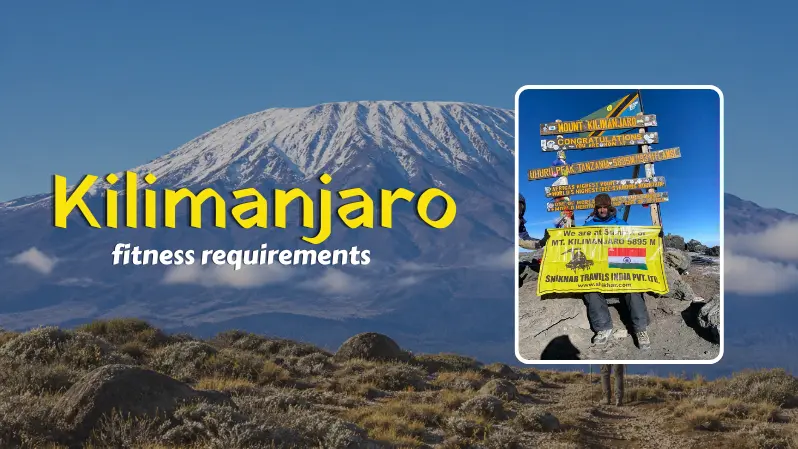
One of the most common questions we hear from first-time climbers is: “Am I fit enough for Kilimanjaro?” It’s a fair question—and understanding the Kilimanjaro fitness requirements might surprise you.
Kilimanjaro is the highest freestanding mountain in the world, standing at 5,895 metres above sea level. It sits in Tanzania, East Africa, and draws tens of thousands of trekkers every year. But unlike technical alpine peaks, it requires no ropes, no ice axes, and no previous mountaineering experience.
What it does require is a specific kind of preparation. The Kilimanjaro fitness requirements focus more on endurance, consistency, and mental resilience than extreme athletic ability. Knowing what that looks like is the difference between reaching Uhuru Peak and turning back at 4,000 metres.
The Honest Truth About Kilimanjaro Fitness Requirements & Difficulty
Kilimanjaro is not a casual hike. It is also not Everest.
The main challenge is not steep terrain or technical climbing, its sustained aerobic output over multiple consecutive days at progressively higher altitudes. By the time you reach base camp on summit night, your body is operating with roughly half the oxygen available at sea level.
The mountain’s overall success rate sits between 65% and 70%. Most people who don’t summit aren’t turning back because their legs gave out. They turn back because of altitude sickness — and the right level of fitness, combined with a smart acclimatisation strategy, dramatically improves your odds.
What Type of Fitness Do Kilimanjaro Fitness Requirements Demand?
Cardiovascular endurance, the most important factor
Your aerobic engine is everything on Kilimanjaro. Each trekking day involves 5 to 9 hours of continuous walking at a slow, steady pace. The famous Swahili mantra on the mountain is pole pole, slowly, slowly, and it’s not just cultural advice, it’s physiological strategy.
You don’t need to be a marathon runner. But you should be able to sustain comfortable, rhythmic movement for several hours without stopping to recover. If a 2-hour hike on hilly terrain leaves you gasping, the mountain will be very difficult. If you can do it comfortably and feel ready to continue, you’re in reasonable shape.
A good benchmark: you should be able to complete a 4 to 5-hour hike carrying a day pack (5–8 kg) at a moderate pace without feeling completely depleted.
Leg strength and muscular endurance
While Kilimanjaro’s trails are not technically demanding, your legs will take a sustained beating over 6 to 9 days. Descents, particularly on the Machame and Lemosho routes — can be steep and hard on the knees. Strong quadriceps, hamstrings, and glutes will protect your joints and help you descend confidently.
Targeted exercises like squats, lunges, step-ups, and calf raises are worth building into your training well before departure.
Core stability
A strong core keeps you upright, balanced, and efficient on uneven terrain. You won’t be doing anything dramatic, no scrambling or technical footwork, but hours of walking on rocky, sometimes loose trails puts continuous demand on your stabilising muscles. Planks, dead bugs, and single-leg balance exercises are simple additions that pay dividends on the mountain.
Flexibility and recovery
Your body will be working hard and sleeping in cold, uncomfortable conditions at altitude. People who stretch regularly and have decent flexibility tend to recover faster between trekking days and experience less muscular soreness by the final push.
The Altitude Factor in Kilimanjaro Fitness Requirements: Why Fitness Alone Isn’t Enough
Here’s what many training guides don’t tell you clearly enough: you can be very fit and still struggle with altitude sickness.
Altitude sickness (Acute Mountain Sickness, or AMS) is not a fitness issue, it’s a physiological response to reduced oxygen that can affect athletes and couch potatoes alike. The best protection is:
- Choosing the right route. Longer routes like Lemosho (7–8 days) and Northern Circuit (9 days) give your body more time to acclimatise than the shorter Marangu route (5–6 days). Success rates on longer routes are significantly higher.
- Ascending slowly. Pole pole is not just a saying, it’s the most effective acclimatisation tool on the mountain.
- Staying well hydrated. Aim for 3 to 4 litres of water per day on the mountain.
- Listening to your body. Persistent headache, nausea, and loss of coordination are signals that should never be ignored.
Fitness helps because a stronger cardiovascular system handles reduced oxygen more efficiently. But the smartest climbers combine fitness with a route and pacing strategy that gives their body time to adapt.
What fitness level is ideal? A simple benchmark
Use this as a rough guide to assess where you stand:
Good to go with focused training (3–4 months out)
- You exercise 2 to 3 times per week, mix of cardio and strength
- You can hike for 3+ hours comfortably with a light pack
- You’re not currently dealing with joint or cardio issues
You can do it, but need a committed training block (5–6 months out)
- You’re moderately active but haven’t done serious hiking
- Long walks (2+ hours) leave you moderately tired
- You’re willing to train consistently and choose a longer route
Seek medical advice and a longer preparation window
- You’re currently inactive or have underlying health conditions
- You get breathless on standard walks
- You’ve had previous issues with altitude or heart/lung health
How to train for Kilimanjaro: the essentials
A solid preparation window is 3 to 6 months. Here’s what to focus on:
Weeks 1–4: Build the base Start walking 3 to 4 times per week. Introduce gentle inclines. Add bodyweight strength work (squats, lunges, step-ups). Duration matters more than intensity at this stage.
Weeks 5–10: Build endurance and load Increase your longest weekly hike to 4–5 hours. Wear your trekking pack (start at 5 kg, build to 8 kg). If you have access to hills or a stairmaster, use them. Consider a weekend overnight hike to practise consecutive days.
Weeks 11–16: Simulate conditions Do back-to-back hiking days (Saturday and Sunday). Your long hike should now be 6+ hours. Focus on your descents — practise going downhill with weight. Reduce intensity in the final 2 weeks before departure.
Year-round: cardio maintenance Cycling, swimming, running, and stair climbing are all excellent cross-training tools. The goal is a well-developed aerobic base, the mountain doesn’t care how you built it.
Special considerations
Age: Kilimanjaro has been summited by trekkers in their 70s and 80s. Age is not a barrier, fitness and acclimatisation strategy are what matter. Older trekkers may benefit from choosing a 9-day route to maximise acclimatisation time.
Weight: Carrying excess weight puts additional strain on your joints and cardiovascular system at altitude. If this applies to you, incorporating weight loss as part of your training programme will genuinely improve your summit chances.
Existing health conditions: Conditions like asthma, diabetes, and heart issues don’t automatically disqualify you. Always consult your GP or a travel health specialist before booking, and be transparent with your operator.
You don’t need to be an athlete to climb Kilimanjaro. But you do need to prepare seriously and honestly.
The trekkers who struggle most are those who underestimate the cumulative toll of 6 to 9 days at altitude, or who arrive under-trained and expect willpower to carry them. The ones who summit and enjoy it are those who built a solid aerobic base, chose a sensible route, went slow, drank water, and listened to their bodies.
If you’re willing to put in 3 to 6 months of consistent preparation, Kilimanjaro is within reach for most healthy adults. And the view from Uhuru Peak, with the curve of the Earth visible and Africa spread out below you, is worth every training session.
Planning your Kilimanjaro climb? Shikhar Travels offers fully supported expeditions with experienced guides, flexible route options, and end-to-end logistics from India and internationally. Get in touch to start planning.
FAQ about Kilimanjaro fitness
Do I need to be athletic to climb Kilimanjaro?
No. Kilimanjaro does not require athletic ability or technical mountaineering experience. What it requires is a solid aerobic base, the ability to walk for 5 to 9 hours on consecutive days, and a commitment to preparation. Most healthy adults who train consistently for 3 to 6 months can reach the summit.
How many days a week should I train for Kilimanjaro?
Aim for 4 to 5 days of activity per week in the final 2 to 3 months before your climb. This should include 2 to 3 cardio or hiking sessions, 1 to 2 strength sessions focused on legs and core, and at least one long hike (4+ hours) per week at the weekend.
Can I climb Kilimanjaro if I’ve never hiked before?
Yes, but you’ll need a longer preparation window, ideally 5 to 6 months, and you should choose one of the longer routes such as Lemosho or Northern Circuit. Start building hiking fitness immediately, progressively increase your pack weight and duration, and don’t underestimate the cumulative effect of multiple days at altitude.
Is Kilimanjaro harder than trekking to Everest Base Camp?
The two treks are comparable in terms of physical demand, but different in character. Kilimanjaro reaches a higher summit elevation (5,895m vs 5,364m for EBC) and the ascent is more compressed, meaning your body has less time to acclimatise. Everest Base Camp involves more total trekking days. Most climbers who’ve done both rate Kilimanjaro’s summit night as the harder single effort.
What is the biggest reason people fail to summit Kilimanjaro?
Altitude sickness is the primary reason trekkers turn back, not physical exhaustion. AMS can affect even very fit individuals and is not predictable from fitness level alone. Choosing a longer route, ascending slowly, staying hydrated, and not ignoring symptoms are the most effective preventative measures.
Can older people climb Kilimanjaro?
Yes. Kilimanjaro has no upper age limit and has been summited by trekkers in their 70s and 80s. Older climbers should allow a longer preparation timeline, opt for a 8 to 9-day route for maximum acclimatisation, and consult a doctor before departure, particularly regarding altitude medication like Diamox.
How long before my climb should I start training?
Start at least 3 months before your climb if you’re already moderately active. If you’re currently inactive or have not done any hiking, aim for 5 to 6 months. The more preparation time you give yourself, the more comfortable, and enjoyable, the experience will be.
Confused about how Kilimanjaro compares to other peaks?
Before you decide, it’s important to understand the Kilimanjaro fitness requirements and what it really takes to reach the summit.
Read this guide to see how Kilimanjaro stacks up against other mountains, and whether you’re truly ready for it.