Kailash Mansarovar Route via Nepal vs Lipulekh: Which One Should You Choose?
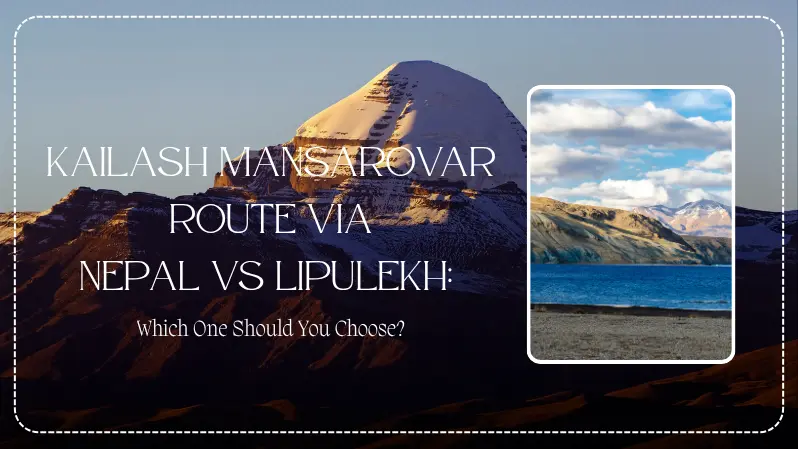
For every pilgrim planning a journey to the sacred abode of Lord Shiva, one of the biggest questions is which Kailash Mansarovar route to choose. Mount Kailash and Lake Mansarovar attract thousands of devotees, adventurers, and spiritual seekers every year, but reaching this remote destination requires careful planning. Today, the two most popular options are the Kailash Mansarovar route via Nepal and the Kailash Mansarovar route via Lipulekh Pass in Uttarakhand.
While both routes ultimately lead to the same sacred destination, they offer vastly different experiences in terms of accessibility, cost, physical difficulty, registration procedures, travel duration, and overall comfort. Some pilgrims prefer the traditional and government-managed Lipulekh route, while others opt for the flexibility and convenience of the Nepal route.
If you’re planning your pilgrimage in 2026 and wondering which Kailash Mansarovar route is right for you, this detailed comparison will help you make an informed decision.
Understanding the Importance of Choosing the Right Kailash Mansarovar Route
The journey to Mount Kailash is not just a vacation; it is a deeply spiritual undertaking that requires physical preparation, logistical planning, and mental readiness. Choosing the appropriate Kailash Mansarovar route can significantly impact your experience.
Factors such as age, fitness level, available vacation time, budget, and personal preferences all play a role. A route that is ideal for a seasoned trekker may not be suitable for a senior citizen or a first-time high-altitude traveler.
Before comparing specific routes, it is important to understand that all pilgrims visiting Mount Kailash and Lake Mansarovar must travel through Tibet and comply with permit requirements established by Chinese authorities. The difference lies primarily in how travelers reach Tibet and the level of effort required before arriving at the sacred sites.
Overview of the Kailash Mansarovar Route via Nepal
The Nepal Kailash Mansarovar route has become the preferred choice for a large number of Indian and international pilgrims. Most journeys begin in Kathmandu, Nepal’s capital city, where pilgrims gather before proceeding toward Tibet.
From Kathmandu, travelers typically enter Tibet through the Kyirong border crossing or take the Simikot-Hilsa route. Depending on the package selected, the journey may involve road transportation, domestic flights, helicopter transfers, or a combination of these options.
One of the biggest advantages of this Kailash Mansarovar route is flexibility. Travelers can choose between overland journeys, luxury packages, and helicopter-assisted itineraries. Tour operators handle permits, accommodation, transportation, and logistics, making the process relatively straightforward.
The Nepal route is particularly attractive for those seeking convenience and shorter travel durations.
Overview of the Kailash Mansarovar Route via Lipulekh
The Lipulekh Kailash Mansarovar route is one of the oldest pilgrimage pathways connecting India and Tibet. Organized by the Government of India through the Ministry of External Affairs, this route follows a historic trail through the Kumaon region of Uttarakhand.
Pilgrims travel through picturesque mountain villages before crossing the Lipulekh Pass into Tibet. This route is widely regarded as the traditional pilgrimage path and holds special significance among devotees who wish to experience the journey as generations of pilgrims did before them.
Unlike the Nepal Kailash Mansarovar route, the Lipulekh route involves extensive trekking. Participants must complete rigorous medical examinations and satisfy eligibility requirements before being selected for the pilgrimage.
For many travelers, the Lipulekh route is as much about the journey as it is about reaching Mount Kailash itself.
Accessibility and Ease of Travel
Accessibility is one of the most important considerations when selecting a Kailash Mansarovar route.
The Nepal route offers unparalleled convenience. Pilgrims can fly directly to Kathmandu from major Indian cities and begin their pilgrimage shortly afterward. Most logistics are managed by tour operators, reducing the administrative burden on travelers.
In contrast, the Lipulekh route involves a more structured process. Applicants must register through official government channels, undergo selection procedures, and attend mandatory briefings. Travel to the starting point in Uttarakhand can also require additional planning.
For travelers seeking a hassle-free experience, the Nepal Kailash Mansarovar route generally provides greater accessibility.
Physical Difficulty: Nepal vs Lipulekh
Perhaps the biggest difference between these two pilgrimage options lies in physical difficulty.
The Nepal Kailash Mansarovar route minimizes trekking requirements. Although pilgrims still need to complete the Kailash Parikrama, much of the journey to Mount Kailash is completed by vehicle or helicopter. This significantly reduces physical strain before reaching the sacred mountain.
The Lipulekh route, however, is considerably more demanding. Pilgrims undertake multiple days of trekking through rugged Himalayan terrain before crossing into Tibet. The journey involves steep ascents, uneven trails, changing weather conditions, and prolonged exposure to high altitudes.
For experienced trekkers and adventure enthusiasts, these challenges add to the pilgrimage’s appeal. However, for travelers with limited trekking experience, the Nepal Kailash Mansarovar route is often a safer and more comfortable choice.
Travel Duration Comparison
The total duration of the pilgrimage varies significantly depending on the chosen Kailash Mansarovar route.
Most Nepal-based itineraries take between 10 and 15 days. Helicopter packages may be completed even faster, making them ideal for working professionals and travelers with limited vacation time.
The Lipulekh route generally requires a longer commitment, often extending beyond three weeks. Additional time is needed for acclimatization, trekking, administrative procedures, and travel within India.
Travelers seeking efficiency often favor the Nepal Kailash Mansarovar route, while those looking for a longer spiritual immersion may prefer Lipulekh.
Cost Analysis of the Kailash Mansarovar Route
Cost is another major factor influencing route selection.
The Lipulekh route is usually more economical because it operates under government supervision and follows standardized pricing structures. Pilgrims benefit from organized logistics and support services at controlled costs.
The Nepal route typically costs more, particularly when helicopter transfers are included. Premium accommodations, private transportation, and expedited travel options contribute to higher package prices.
However, many travelers view these additional costs as worthwhile because of the convenience and comfort provided by the Nepal route.
Registration and Permit Requirements
The registration process differs substantially between the two routes.
For the Nepal route, pilgrims generally register through authorized tour operators. These companies coordinate Tibet permits, travel documents, accommodation arrangements, and transportation logistics.
The Lipulekh route requires participation in the official government selection process. Applicants must complete registration through designated portals, submit required documentation, and undergo comprehensive medical evaluations.
The administrative simplicity of the Nepal route often appeals to travelers who wish to avoid complex application procedures.
Accommodation and Comfort Levels
Accommodation standards vary considerably between the two routes.
Most Nepal-based operators offer a range of packages that include comfortable hotels in Kathmandu and well-organized lodging arrangements throughout the pilgrimage. Higher-end packages may include upgraded accommodations and additional support services.
The Lipulekh Kailash Mansarovar route prioritizes practicality over luxury. Since the route traverses remote mountainous regions, accommodations can be basic in certain areas. Pilgrims often stay in government-arranged facilities and temporary camps.
Travelers who prioritize comfort generally find the Nepal Kailash Mansarovar route more appealing.
Scenic Beauty and Cultural Experience
Both routes offer extraordinary landscapes, but the nature of the experience differs.
The Nepal Kailash Mansarovar route showcases the Himalayan ranges, Tibetan Plateau, and vast open landscapes surrounding Mount Kailash and Lake Mansarovar. Travelers enjoy panoramic mountain views while benefiting from efficient transportation.
The Lipulekh route offers a more immersive Himalayan experience. Pilgrims pass through remote villages, ancient trails, forests, rivers, and mountain communities before reaching Tibet. This route provides greater exposure to traditional Himalayan culture and local lifestyles.
For travelers interested in cultural immersion, the Lipulekh Kailash Mansarovar route offers a unique perspective.
Best Route for Senior Citizens
Senior citizens often prioritize comfort, safety, and reduced physical strain.
The Nepal Kailash Mansarovar route, especially helicopter-based packages, is widely considered the best option for older travelers. Reduced trekking requirements make the pilgrimage accessible to a broader range of participants.
Although some physically fit seniors successfully complete the Lipulekh route, its demanding trekking sections can present significant challenges.
For most older pilgrims, the Nepal Kailash Mansarovar route provides a more manageable experience.
Best Route for Adventure Seekers
Adventure enthusiasts often seek challenging experiences that test endurance and resilience.
For these travelers, the Lipulekh Kailash Mansarovar route delivers a more authentic Himalayan expedition. The extended trekking sections, remote terrain, and traditional pilgrimage atmosphere create a sense of accomplishment that many adventurers value.
While the Nepal route remains spiritually rewarding, it emphasizes convenience over physical challenge.
Spiritual Significance of Both Routes
Regardless of the chosen Kailash Mansarovar route, the spiritual destination remains unchanged. Pilgrims from both routes eventually reach the sacred Lake Mansarovar and Mount Kailash.
Many devotees believe the transformative power of the pilgrimage comes from devotion and intention rather than the specific path taken. Whether arriving via Nepal or Lipulekh, pilgrims experience the same sacred landscapes and participate in the same revered rituals.
Ultimately, spiritual fulfillment depends less on the route and more on the pilgrim’s personal journey.
Final Verdict: Which Kailash Mansarovar Route Should You Choose?
Choosing the best Kailash Mansarovar route depends entirely on your priorities.
If you value convenience, shorter travel times, flexible departure schedules, easier registration procedures, and greater comfort, the Nepal Kailash Mansarovar route is likely your best option. It is especially suitable for families, senior citizens, first-time pilgrims, and travelers with limited time.
If you are physically fit, enjoy trekking, appreciate traditional pilgrimage experiences, and want to participate in an official government-organized yatra, the Lipulekh Kailash Mansarovar route offers an unforgettable adventure rich in history and cultural significance.
Both routes lead to one of the world’s most sacred destinations. The right choice is the one that aligns with your fitness level, budget, available time, and spiritual aspirations.
Explore the Traditional Trek Route →
Discover the Helicopter Route →
Frequently Asked Questions
Which route is easiest?
The Nepal route is generally considered the easiest due to reduced trekking requirements and optional helicopter services.
Which route is best for senior citizens?
Most senior citizens prefer the Nepal route because it offers greater comfort and shorter travel durations.
Is the Lipulekh route difficult?
Yes, the Lipulekh route involves significant trekking and requires a higher level of physical fitness.
Which route is cheaper?
The Lipulekh route is generally more affordable than most Nepal-based private pilgrimage packages.
Can I complete Kailash Mansarovar Yatra by helicopter?
Yes, helicopter packages are available through the Nepal route.
Which route has better accommodation?
The Nepal route typically offers better accommodation options and more comfortable travel arrangements.
Does every route include the Kailash Parikrama?
Most pilgrimage packages include the sacred Kailash Parikrama, although specific itineraries may vary.
Which route should first-time pilgrims choose?
First-time pilgrims often find the Nepal route more accessible and easier to manage.
Is government registration required for the Lipulekh route?
Yes, pilgrims using the Lipulekh route must complete the official government registration and selection process.
Are both routes spiritually significant?
Absolutely. Both routes ultimately lead to Mount Kailash and Lake Mansarovar, making either option spiritually meaningful.