Sri Akal Takht Sahib: History, Significance, Architecture & Complete Visitor Guide
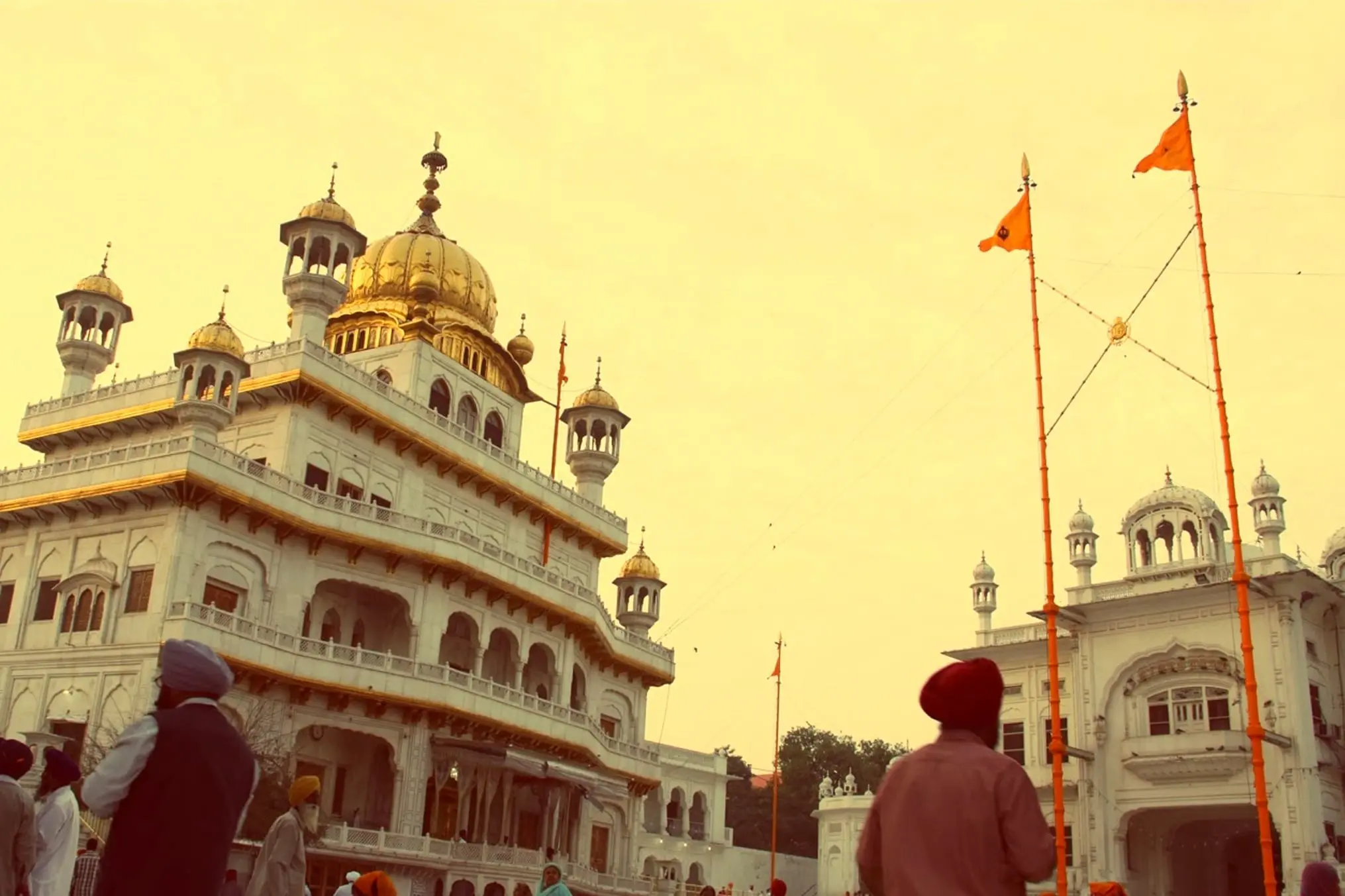
Sri Akal Takht Sahib is one of the most important and revered institutions in Sikhism and one of the five Takhts, or seats of authority, of the Sikh faith. Located directly opposite Sri Harmandir Sahib in the Golden Temple complex in Amritsar, Punjab, it represents the principle that spiritual devotion and responsibility in the world should exist together.
For visitors, Sri Akal Takht Sahib is much more than a historic building. It is a place deeply connected with Sikh history, leadership, justice, courage, community decision-making and the concept of Miri-Piri. The site also holds important historical weapons associated with Sikh Gurus and warriors.
Whether you are planning a pilgrimage to Amritsar, researching Sikh heritage, or visiting the Golden Temple for the first time, understanding the history and significance of Sri Akal Takht Sahib can make the experience much more meaningful.
What Is Sri Akal Takht Sahib?
Akal Takht, meaning the “Eternal Throne,” is the principal seat of Sikh authority. It was established by Guru Hargobind Sahib Ji, the sixth Sikh Guru, in the early 17th century.
The Takht stands within the Sri Harmandir Sahib complex in Amritsar, directly opposite the Golden Temple. Its position is highly symbolic: Sri Harmandir Sahib represents spiritual devotion, while Sri Akal Takht Sahib represents temporal responsibility and the practical protection and welfare of the Sikh community.
This relationship reflects the Sikh concept of Miri-Piri—the integration of spiritual and worldly responsibilities.
Today, Akal Takht continues to hold a central position in Sikh religious and community affairs.
History of Sri Akal Takht Sahib
The history of Sri Akal Takht Sahib is closely connected with the transformation of the Sikh community under Guru Hargobind Sahib Ji.
After the martyrdom of Guru Arjan Dev Ji, the sixth Guru emphasized that Sikhs should combine spiritual strength with the ability to stand against injustice. Guru Hargobind Sahib Ji adopted the principle of Miri-Piri and famously carried two swords symbolizing temporal and spiritual authority.
The Akal Takht was established in front of Harmandir Sahib as a place where the Guru could address the social, political and temporal concerns of the Sikh community. The SGPC records its establishment under Guru Hargobind Sahib Ji in 1609, while other historical references commonly associate its foundation and revelation with 1606.
The original structure was also known as Akal Bunga. According to the National Mission on Monuments and Antiquities, the historic structure is associated with Guru Hargobind and served as a place where he held court and addressed grievances.
The development of the Akal Takht marked an important stage in Sikh history because it provided a recognized place for collective discussion, decision-making and community affairs.
Why Did Guru Hargobind Sahib Ji Establish the Akal Takht?
A common question about Sri Akal Takht Sahib is why Guru Hargobind Sahib Ji established it directly opposite Harmandir Sahib.
The answer is connected with the Sikh principle of Miri-Piri.
Piri refers to spiritual authority, while Miri refers to temporal or worldly responsibility. Sikh tradition emphasizes that spirituality should not be separated from the responsibility to protect justice, dignity, and the wider community.
By establishing the Akal Takht, Guru Hargobind Sahib Ji created a place where matters affecting the Sikh community could be discussed and addressed.
The SGPC describes the Akal Takht as a place where Guru Hargobind Sahib Ji preached to Sikhs, discussed community problems, and encouraged Sikhs to resolve their disputes. Martial activities were also associated with the open space around the Takht.
Thus, the Akal Takht became an important symbol of spiritual strength, social responsibility and resistance to injustice.
Sri Akal Takht Sahib and the Concept of Miri-Piri
The concept of Miri-Piri is essential to understanding Sri Akal Takht Sahib.
The two ideas can be broadly understood as:
- Piri – spiritual responsibility and devotion
- Miri – temporal responsibility and worldly affairs
The location of the Akal Takht opposite Sri Harmandir Sahib visually expresses this relationship.
A visitor standing in the Golden Temple complex can therefore see two complementary dimensions of Sikh philosophy: devotion and service on one side, and responsibility, justice and collective welfare on the other.
This is one reason the Akal Takht occupies such a distinctive place in Sikh history.
Sri Akal Takht Sahib as a Seat of Sikh Authority
Sri Akal Takht Sahib is regarded as the principal seat of Sikh authority among the five Takhts.
The Delhi Sikh Gurdwara Management Committee describes the Akal Takht as the supreme throne of the Panj Takht and an institution concerned with the social, political, economic and religious welfare of the Sikh community.
The other four Takhts are:
- Takht Sri Keshgarh Sahib – Anandpur Sahib, Punjab
- Takht Sri Patna Sahib – Patna, Bihar
- Takht Sri Hazur Sahib – Nanded, Maharashtra
- Takht Sri Damdama Sahib – Talwandi Sabo, Punjab
Together, these five Takhts are among the most significant seats of authority in Sikhism.
What Is the Significance of Sri Akal Takht Sahib?
The significance of Sri Akal Takht Sahib can be understood through several dimensions.
1. Religious significance
The Akal Takht is one of the five Takhts of Sikhism and holds exceptional religious importance.
2. Historical significance
It is associated with Guru Hargobind Sahib Ji and the development of the Sikh community during a period of major political and social change.
3. Spiritual and temporal balance
Its location opposite Harmandir Sahib represents the Sikh principle of balancing spiritual life with worldly responsibility.
4. Community leadership
Historically, the Akal Takht served as a place where important community issues were discussed and decisions were made.
5. Sikh heritage
The complex preserves important historical objects, including weapons connected with Sikh Gurus and warriors. The National Mission on Monuments and Antiquities notes that these weapons form part of the site’s historical heritage.
Architecture and Location of Sri Akal Takht Sahib
Akal Takht stands inside the Golden Temple complex in Amritsar, directly opposite Sri Harmandir Sahib.
Its architectural position is particularly meaningful. The Akal Takht and Harmandir Sahib face each other across the sacred complex, creating a powerful visual representation of the relationship between spiritual and temporal authority.
The UNESCO World Heritage Centre’s description of the Harmandir Sahib complex identifies the Akal Takht as the highest seat of authority in the Sikh religious hierarchy and notes its association with the Guru Granth Sahib and historic Sikh weapons.
For someone visiting the Golden Temple, the Akal Takht is therefore not a separate attraction that should be treated as an afterthought. It is an integral part of the historic and spiritual landscape of the complex.
Sri Akal Takht Sahib and the Guru Granth Sahib
The movement of the Guru Granth Sahib between Sri Harmandir Sahib and Akal Takht forms an important part of the daily religious routine at the Golden Temple complex.
The District Amritsar administration notes that the Guru Granth Sahib is kept in the Temple during the day and at night in the Akal Takht.
This daily tradition is one of the experiences that makes a visit to the Golden Temple complex particularly memorable.
Visitors who arrive during the early morning or evening ceremonies may witness important parts of this daily cycle, although exact timings can vary by season and religious schedule.
What Can Visitors See at Sri Akal Takht Sahib?
A visit to Akal Takht allows travellers to experience an important part of Sikh heritage within the Golden Temple complex.
Depending on the timing of your visit, you may experience:
- The historic Akal Takht building
- Nishan Sahib flags
- The surrounding historic complex
- Sikh devotional activities
- The daily movement associated with the Guru Granth Sahib
- Displays or ceremonial presentation of historic Sikh weapons
- The atmosphere of the Golden Temple parikrama
- Community service and Langar within the wider complex
The experience is particularly powerful when combined with a visit to Sri Harmandir Sahib, as the two sites help explain the spiritual and temporal dimensions of Sikh tradition.
How to Visit Sri Akal Takht Sahib
Akal Takht is located inside the Golden Temple complex in Amritsar, Punjab.
Visitors should remember that this is an active place of worship rather than simply a tourist monument. Appropriate behaviour and dress are therefore important.
Basic visitor etiquette
When visiting Akal Takht and the Golden Temple complex:
- Cover your head before entering.
- Remove your shoes at the designated shoe facility.
- Keep your feet clean before entering sacred areas.
- Dress modestly and respectfully.
- Avoid smoking, tobacco and intoxicants within the premises.
- Maintain a quiet and respectful manner.
- Follow instructions given by the sewadars.
- Do not disturb people engaged in prayer or religious ceremonies.
The Amritsar district administration specifically notes the requirement to cover the head and remove shoes before entering the Golden Temple premises.
Best Time to Visit Sri Akal Takht Sahib
Because the Golden Temple complex operates around daily religious activities, there is no single “best” time for everyone.
Early morning can be particularly meaningful for visitors who want to experience the beginning of the day’s religious routine. Evening can also provide a memorable atmosphere as the complex becomes illuminated and devotional activities continue.
If your purpose is photography, sightseeing and a quieter experience, visiting during less crowded periods may be preferable. If your purpose is spiritual participation, you may instead want to plan around the relevant prayer and ceremonial schedule.
Timings associated with ceremonies can change according to season, so visitors should check current information before planning around a specific ceremony.
How to Reach
Akal Takht is centrally located within the Golden Temple complex in Amritsar.
By air
The nearest major airport is Sri Guru Ram Dass Jee International Airport, which serves Amritsar and surrounding areas.
By train
Amritsar Junction railway station is well connected with major Indian cities. From the station, visitors can use local transport to reach the Golden Temple area.
By road
Amritsar has road connections with major cities in Punjab and northern India. Local taxis, auto-rickshaws and other transport options are available for reaching the Golden Temple area.
Once inside the Golden Temple complex, Sri Akal Takht Sahib is easy to locate because it stands directly opposite Sri Harmandir Sahib.
Places to Visit
A visit to Akal Takht can easily be combined with several important attractions in Amritsar.
Some nearby places include
- Sri Harmandir Sahib (Golden Temple)
- Jallianwala Bagh
- Partition Museum
- Gobindgarh Fort
- Gurdwara Baba Atal Sahib
- Gurdwara Mata Kaulan
- Central Sikh Museum
The Punjab government’s Amritsar district website lists several of these attractions around the Golden Temple complex.
A well-planned Amritsar heritage itinerary can therefore combine Sikh religious heritage, colonial history, museums and local culture in a single trip.
Why Should You Visit?
For Sikh pilgrims, Sri Akal Takht Sahib is a place of profound religious and historical importance. For international travellers and heritage enthusiasts, it provides an opportunity to understand an important institution within Sikh civilization.
Its significance cannot be fully understood simply by looking at its architecture. The real story lies in what the institution represents: faith combined with responsibility, spirituality combined with action, and individual devotion combined with community welfare.
Visiting the Akal Takht alongside Harmandir Sahib gives travellers a deeper understanding of why the Golden Temple complex is such an important centre of Sikh heritage.
Follow Us & Travel With Us
Get travel inspiration, exciting destinations, tour updates & special offers.
Frequently Asked Questions
What is Sri Akal Takht Sahib famous for?
Akal Takht is famous as the principal seat of Sikh authority and one of the five Takhts of Sikhism. It was established by Guru Hargobind Sahib Ji and represents the Sikh principle of Miri-Piri.
Who built Sri Akal Takht Sahib?
Sri Akal Takht Sahib was established by Guru Hargobind Sahib Ji, the sixth Sikh Guru. Historical sources associate its establishment with the early 17th century, particularly 1606–1609.
Where is Akal Takht located?
Sri Akal Takht Sahib is located inside the Golden Temple complex in Amritsar, Punjab, directly opposite Sri Harmandir Sahib.
Is Akal Takht one of the five Takhts?
Yes. Sri Akal Takht Sahib is one of the five Takhts of Sikhism and is regarded as the principal seat among them.
What does Akal Takht mean?
Akal Takht is generally translated as “Throne of the Timeless One” or “Eternal Throne.” It refers to the institution’s connection with timeless divine authority.
Can tourists visit Sri Akal Takht Sahib?
Yes. Visitors can enter the Golden Temple complex and experience the historic surroundings of Sri Akal Takht Sahib, provided they follow the religious etiquette and instructions applicable to the sacred complex.
Is there an entry fee for Akal Takht?
There is no general admission ticket for visiting the Golden Temple complex. The site is a place of worship open to people of all backgrounds.
Final Thoughts
Akal Takht is one of the defining symbols of Sikh history and identity. Established by Guru Hargobind Sahib Ji, it represents a distinctive Sikh understanding of how spirituality should be connected with courage, justice, responsibility and service.
Its location opposite Sri Harmandir Sahib makes the Golden Temple complex more than a collection of historic buildings. Together, these institutions communicate the powerful idea of Miri-Piri—that devotion to the Divine and responsibility toward society can exist together.
For anyone travelling to Amritsar, Sri Akal Takht Sahib deserves a meaningful place in the itinerary. Take time to understand its history, observe the traditions respectfully and experience the wider Golden Temple complex. The visit can offer far more than sightseeing—it can provide a deeper appreciation of Sikh heritage, values and history.