High Altitude Mountains in India: A Guide to India’s Most Majestic Peaks
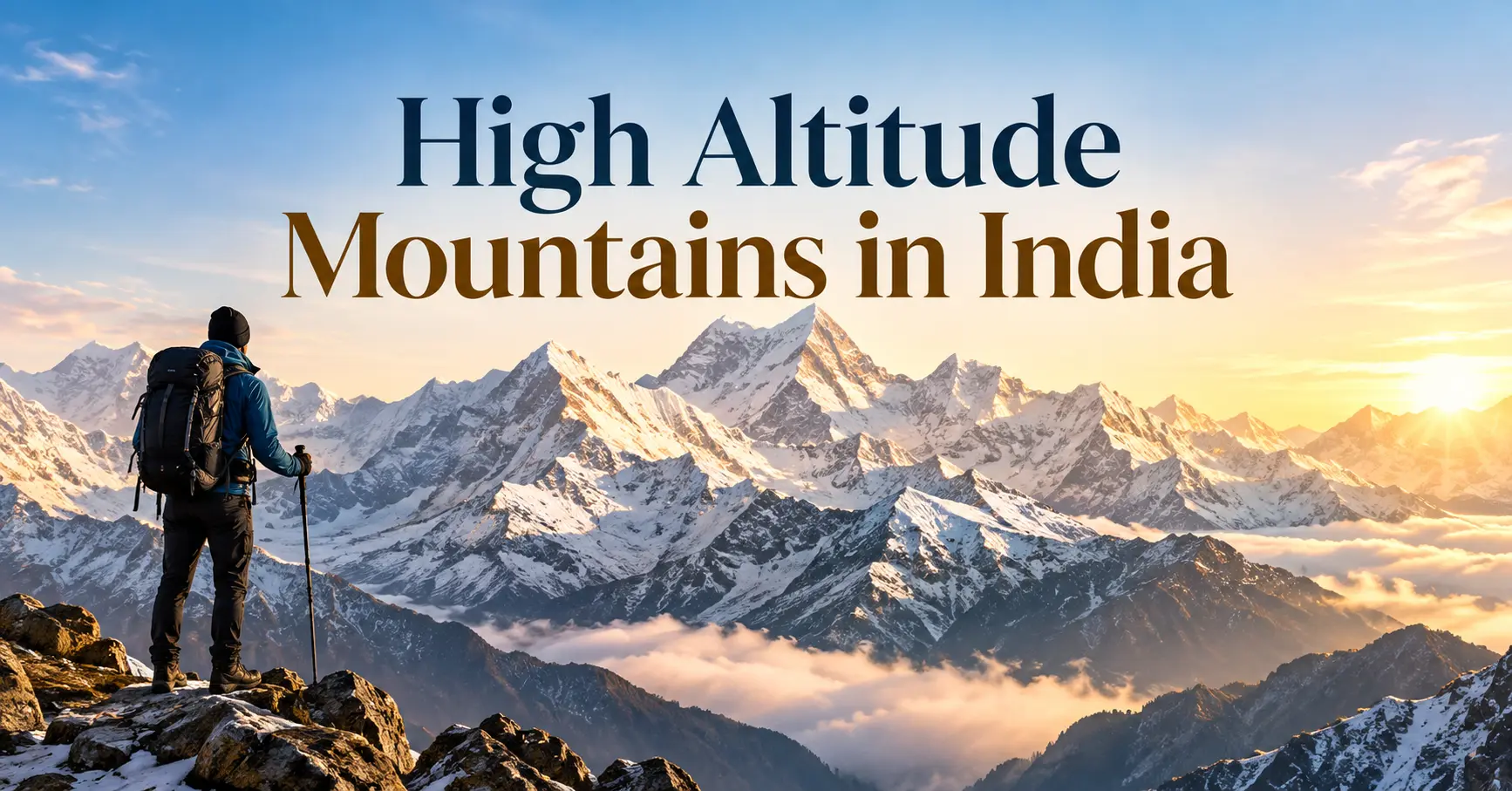 India is home to some of the most spectacular mountain landscapes in the world, stretching from the rugged ranges of Ladakh and Himachal Pradesh to the dramatic peaks of Uttarakhand and Sikkim. For trekkers, climbers, photographers, and adventure enthusiasts, the high altitude mountains in India offer an opportunity to experience some of the country’s most challenging and breathtaking terrain.
From accessible high-altitude trekking routes to demanding mountaineering expeditions, these mountains offer very different experiences depending on altitude, season, technical difficulty, and previous experience. Understanding these differences is essential before choosing a peak or planning a Himalayan adventure.
Why High Altitude Mountains?
High-altitude mountains generally refer to peaks and mountainous regions located at significant elevations above sea level, where conditions become considerably different from those at lower elevations.
As altitude increases, temperatures fall, oxygen availability decreases, weather can change rapidly, and the physical demands of trekking or climbing become greater. In the Indian Himalayas, several peaks rise well above 5,000 metres, while some of the country’s highest mountains exceed 7,000 metres.
However, altitude alone does not determine how difficult a mountain is to climb. Terrain, weather, route conditions, technical sections, acclimatization, and climbing experience can all have a major impact.
Why Are India’s High Altitude Mountains So Popular?
The Indian Himalayas combine extraordinary scenery with a wide range of adventure opportunities. Snow-covered peaks, glaciers, high mountain passes, remote valleys, and traditional Himalayan communities make these regions attractive to both domestic and international travellers.
Some mountains are approached through trekking routes, while others require specialist mountaineering skills and organized expeditions.
The major reasons people choose these mountains include:
- Dramatic Himalayan landscapes
- High-altitude trekking opportunities
- Mountaineering and peak-climbing experiences
- Glaciers and snow-covered terrain
- Remote and less-developed mountain regions
- Cultural experiences in Himalayan communities
- Opportunities for photography and exploration
Some of the Most Notable High Altitude Mountains in India
India has numerous high peaks and climbing objectives. The right choice depends heavily on your experience and the type of adventure you are looking for.
1. Kangchenjunga – Sikkim
Kangchenjunga, located on the India-Nepal border, is one of the world’s highest mountains and the highest peak associated with India. Its enormous elevation, steep terrain, severe weather, and technical challenges make it a serious mountaineering objective.
The mountain also holds deep cultural significance in Sikkim. Rather than being viewed simply as a climbing destination, Kangchenjunga is closely connected with the traditions and spiritual beliefs of the region.
For most travellers, the surrounding landscapes and trekking areas provide a more realistic way to experience the mountain than attempting an ascent.
2. Nanda Devi – Uttarakhand
Nanda Devi is one of India’s most iconic Himalayan peaks and is located within the Nanda Devi National Park, a UNESCO World Heritage Site.
The mountain reaches more than 7,800 metres and is surrounded by an exceptionally dramatic landscape of high ridges, glaciers, and valleys.
Access and climbing are subject to strict regulations because of the ecological and cultural importance of the region. For travellers interested in Himalayan scenery, the surrounding protected landscape offers remarkable opportunities for exploration without requiring an attempt on the summit.
3. Kamet – Uttarakhand
At more than 7,700 meters, Mount Kamet is among the highest peaks in India. Located in the Garhwal Himalayas, it is a significant mountaineering objective with challenging high-altitude terrain.
The region is remote, and expedition planning requires careful consideration of logistics, weather, acclimatization, and route conditions.
Kamet is therefore better suited to experienced mountaineers than casual trekkers.
4. Saltoro Kangri – Ladakh
Saltoro Kangri is one of the major high peaks of the Karakoram region and rises to more than 7,700 metres.
Its remote location and difficult terrain make it an extremely serious mountaineering objective. The surrounding region is also subject to geographical and security considerations, meaning that access should always be checked through current official regulations and authorized expedition channels.
5. Kun and Nun – Ladakh
The Nun-Kun massif in the Ladakh region is another major high-altitude mountaineering destination.
Nun rises above 7,000 metres, making it one of the highest peaks in the Indian Himalayas. The area features glaciers, steep slopes, exposed ridges, and demanding climbing terrain.
For experienced climbers, the massif represents a significant Himalayan expedition. For other travellers, the wider Ladakh landscape provides plenty of opportunities for high-altitude trekking and adventure without attempting a major summit.
High Altitude Peaks for Trekkers and Aspiring Climbers
Not every high Himalayan adventure requires attempting one of India’s highest summits.
Several lower peaks and high-altitude objectives can provide a progression toward more demanding mountaineering.
Depending on current regulations, route conditions, and expedition availability, destinations such as Kang Yatse II, Friendship Peak, Yunam Peak, and other Himalayan climbing objectives can be considered by appropriately prepared adventurers.
The important point is to choose a mountain according to your experience rather than simply its height.
A 6,000-metre peak with technical terrain can be significantly more demanding than a lower mountain with a straightforward trekking route.
Best Regions for HighAltitude Mountain Adventures in India
Ladakh
Ladakh is one of India’s most popular high-altitude adventure regions. Its dry landscape, vast valleys, dramatic passes, and high peaks create a completely different Himalayan environment from the greener mountains of Uttarakhand or Himachal Pradesh.
The region is particularly attractive for experienced trekkers and climbers interested in high-altitude landscapes.
Himachal Pradesh
Himachal Pradesh offers a broad range of trekking and mountaineering experiences. The state includes popular adventure regions around Manali, Lahaul-Spiti, Kullu, and other Himalayan valleys.
It is possible to find everything from high-altitude trekking routes to more demanding climbing objectives.
Uttarakhand
Uttarakhand is one of India’s major Himalayan adventure destinations, with the Garhwal and Kumaon ranges containing numerous famous peaks, glaciers, trekking routes, and pilgrimage trails.
The state is particularly suitable for travellers who want to combine mountain scenery with cultural and spiritual experiences.
Sikkim
Sikkim provides spectacular views of the eastern Himalayas and the Kangchenjunga massif. The region is known for its forests, alpine landscapes, high mountain passes, and rich local culture.
Because several areas are environmentally and culturally sensitive, travellers should check current permits and access requirements before planning their journey.
High-Altitude Trekking vs Mountain Climbing
One of the most important distinctions for beginners is the difference between trekking and mountaineering.
High-altitude trekking generally follows established trails or routes and may involve significant elevation gain without requiring advanced technical climbing skills.
Mountain climbing, on the other hand, can involve glaciers, ropes, crampons, ice axes, rock climbing, steep snow slopes, and other specialist techniques.
A person who has completed a high-altitude trek should not automatically assume that they are ready for a technical Himalayan expedition.
Building experience gradually is a much safer approach.
When Is the Best Time to Visit High Altitude Mountains in India?
There is no single season that works for every Himalayan region.
Weather patterns vary considerably between Ladakh, Himachal Pradesh, Uttarakhand, and Sikkim. Some areas become inaccessible during heavy snowfall, while others have their most suitable climbing or trekking conditions during different parts of the year.
In general, the best period depends on:
- The mountain or trekking route
- Altitude
- Snow conditions
- Monsoon influence
- Road accessibility
- Local weather
- Expedition regulations
- Current route conditions
Before booking an expedition, check the latest information from local authorities, experienced operators, and relevant mountaineering organizations.
How to Prepare for a High Altitude Mountains Adventure
Preparation becomes increasingly important as altitude increases.
Build Your Fitness
Develop cardiovascular endurance through activities such as running, cycling, swimming, hiking, or brisk walking. Strength training for the legs and core can also help with long days in mountainous terrain.
Gain Trekking Experience
If you are new to high-altitude environments, start with demanding trekking routes before progressing toward technical peaks.
Experience with long walking days, uneven terrain, cold temperatures, and changing weather can help you understand how your body responds to mountain conditions.
Acclimatize Properly
Acclimatization allows the body to gradually adapt to reduced oxygen availability at higher elevations.
A responsible itinerary should include appropriate acclimatization days rather than trying to gain altitude too quickly.
Learn Basic Mountain Skills
For climbing objectives, appropriate training may include:
- Rope techniques
- Glacier travel
- Crampon use
- Ice-axe techniques
- Snow travel
- Navigation
- Mountain safety
- Emergency procedures
Technical training should be completed with qualified instructors before attempting a serious climbing route.
What Equipment Do You Need?
The exact equipment depends on whether you are trekking or climbing.
For high-altitude trekking, essential items may include:
- Layered clothing
- Waterproof outerwear
- Warm sleeping bag
- Trekking boots
- Gloves and warm socks
- Sunglasses
- Sunscreen
- Headlamp
- Water bottles
- Personal first-aid supplies
- Navigation and communication equipment
Technical climbing expeditions may additionally require specialized equipment such as crampons, ice axes, helmets, harnesses, ropes, and other safety equipment.
Never choose equipment based only on a generic checklist. Your gear should match the altitude, season, route, and technical demands of the specific expedition.
Is High Altitude Mountains Climbing Suitable for Beginners?
Some high-altitude trekking experiences can be suitable for beginners with appropriate preparation, but serious mountaineering is a different matter.
Beginners should ideally develop their experience progressively:
Trekking → High-altitude trekking → Basic climbing training → Introductory peak → Advanced expedition
This approach helps build physical endurance, technical ability, confidence, and mountain awareness.
The highest mountain is not necessarily the best first mountain.
Safety Tips for High Altitude Mountains Adventures
High-altitude environments should always be treated seriously.
Follow the guidance of qualified guides and expedition leaders, maintain a sensible pace, stay hydrated, and allow sufficient time for acclimatization.
Be aware of symptoms associated with altitude illness and understand that worsening symptoms should never be ignored.
Weather is another major factor. Himalayan conditions can change quickly, and an itinerary may need to change because of snowfall, storms, road closures, or route conditions.
A successful expedition is not simply reaching the summit. Returning safely is equally important.
How to Choose the Right High Altitude Mountains in India
Before selecting a mountain, consider five important factors:
- Experience
Choose a route that matches your previous trekking or climbing experience. - Altitude:
Higher elevation generally increases the physiological demands of the journey. - Technical difficulty:
Determine whether the route requires ropes, crampons, glacier travel, rock climbing, or other technical skills. - Season:
Research the appropriate season for the specific mountain rather than relying on a general Himalayan travel calendar. - Logistics:
Consider transportation, permits, accommodation, guides, equipment, emergency support, and the overall length of the expedition.
Follow Us & Travel With Us
Get travel inspiration, exciting destinations, tour updates & special offers.
Frequently Asked Questions on High Altitude Mountains
Which are the highest mountains in India?
Some of India’s highest peaks include Kangchenjunga, Nanda Devi, Kamet, and other major Himalayan and Karakoram peaks. Access and climbing permissions vary considerably between mountains.
What is the best high-altitude mountain for beginners?
There is no universal answer because beginner suitability depends on previous trekking experience, fitness, technical skills, route conditions, and the specific expedition. Lower and less technical objectives are generally a better starting point than major Himalayan summits.
What is the difference between high-altitude trekking and mountaineering?
High-altitude trekking usually involves established trails and does not necessarily require advanced climbing techniques. Mountaineering can involve technical terrain, glaciers, ropes, crampons, and specialized equipment.
How should I prepare for a Himalayan expedition?
Build cardiovascular and muscular fitness, gain experience through progressively challenging treks, learn relevant technical skills, and follow an itinerary that allows adequate acclimatization.
Are all high-altitude mountains open for climbing?
No. Some mountains and protected regions have restrictions, permit requirements, environmental regulations, or other access limitations. Always verify current rules before planning an expedition.
Final Thoughts
The high altitude mountains in India represent far more than a collection of impressive peaks. They are landscapes of glaciers, remote valleys, ancient cultures, challenging terrain, and extraordinary natural beauty.
Whether your goal is to complete your first high-altitude trek or eventually take on a demanding Himalayan expedition, the best approach is to progress gradually and choose an objective that matches your abilities.
India’s mountains offer opportunities for almost every level of adventure—but the Himalayas reward preparation, patience, respect, and responsible travel.
Choose the mountain for the experience it offers, not simply for the number on its elevation sign.