Himalayan Mountains in India: Famous Peaks, Treks & Complete Travel Guide
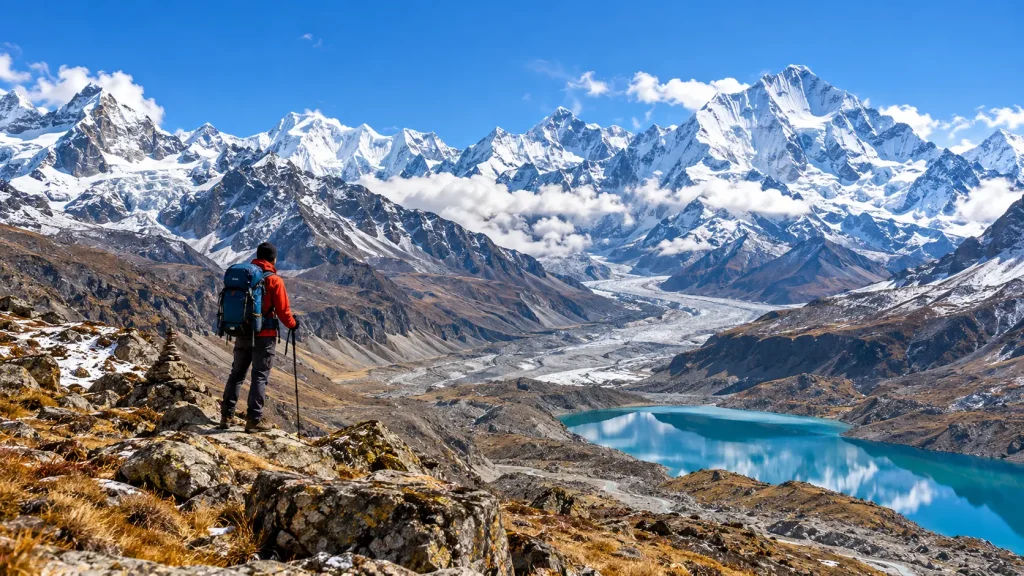
The Himalayan Mountains in India form one of the most spectacular mountain landscapes on Earth. Stretching across the northern and northeastern parts of the country, the Indian Himalayas are home to towering snow-covered summits, glaciers, high-altitude deserts, alpine meadows, sacred valleys, remote villages and some of the finest trekking and mountaineering routes in Asia.
For travellers, the Himalayas offer much more than beautiful mountain scenery. The region brings together adventure, spirituality, wildlife, local culture and centuries-old traditions. While some visitors come to admire famous mountains such as Kanchenjunga and Nanda Devi, experienced mountaineers are attracted by expedition peaks including Mount Nun, Mount Kun, Satopanth and several other challenging summits.
At the same time, smaller trekking and climbing peaks such as Kang Yatse II, Friendship Peak and Kedarkantha make Himalayan adventure accessible to people at different experience levels.
This guide explores the Himalayan Mountains in India, their major regions, famous peaks, mountaineering destinations, trekking mountains and the best ways to experience this extraordinary part of the country.
Where Are the Himalayan Mountains in India?
The Himalayan mountain system extends across the northern edge of the Indian subcontinent. Within India, the main Himalayan landscapes are found across Ladakh, Jammu and Kashmir, Himachal Pradesh, Uttarakhand, Sikkim, Arunachal Pradesh and adjoining northeastern mountain regions.
The Indian Mountaineering Foundation broadly identifies the Indian Himalaya with regions including Arunachal, Sikkim, Uttarakhand, Himachal, Jammu & Kashmir and the eastern Karakoram. The Indian mountain landscape contains Kanchenjunga above 8,000 metres as well as numerous technically demanding peaks between 6,000 and 7,000 metres.
The landscape changes considerably from west to east. Ladakh is characterised by high-altitude desert scenery, dramatic barren mountains and broad valleys. Himachal Pradesh combines forest-covered mountains with alpine landscapes and high passes. Uttarakhand is famous for its glaciers, sacred peaks and Garhwal and Kumaon ranges, while Sikkim and Arunachal Pradesh feature greener eastern Himalayan environments.
This geographical variety is one reason travellers can return to the Himalayas several times and experience something completely different on every journey.
Why Are the Himalayan Mountains in India Famous?
The Himalayan Mountains in India are famous not only because of their elevation but also because of their immense geographical, cultural and spiritual importance.
These mountains contain major glaciers and river catchments, provide habitat for rare Himalayan wildlife and support communities that have developed distinctive mountain cultures over generations. Hindu pilgrimage centres, Buddhist monasteries, ancient trade routes and traditional villages are found throughout the region.
For adventure travellers, the Himalayas provide opportunities for trekking, mountaineering, skiing, cycling, rafting, camping, wildlife exploration and photography.
India also offers an unusually broad range of mountain experiences. A first-time trekker can walk through forests and alpine meadows, while an experienced mountaineer can undertake a technical expedition to a remote 6,000- or 7,000-metre summit.
Famous Himalayan Mountains in India
India’s Himalayan regions contain hundreds of named peaks, but certain mountains stand out because of their altitude, landscape, mountaineering history or cultural importance.
Kanchenjunga
Kanchenjunga rises to approximately 8,586 metres and is the highest mountain associated with India. Located along the India-Nepal border in the eastern Himalayas, the enormous Kanchenjunga massif dominates the mountain scenery of Sikkim.
The mountain is deeply respected by communities in the region and forms an important part of Sikkim’s cultural and spiritual landscape. Travellers do not need to be mountaineers to appreciate Kanchenjunga. Locations around Pelling and trekking routes in western Sikkim can provide spectacular views of the massif.
For international travellers searching for dramatic Himalayan scenery combined with Buddhist culture, forests and traditional villages, Sikkim provides one of the most distinctive Himalayan experiences in India.
Nanda Devi
Nanda Devi, rising to approximately 7,816 metres, is one of the most celebrated mountains of Uttarakhand.
Its distinctive profile and isolated setting have given it an important place in Indian Himalayan history, culture and mountaineering. The mountain lies within an ecologically sensitive region and forms part of the greater Nanda Devi landscape.
The surrounding Kumaon and Garhwal Himalayas contain numerous glaciers, valleys and high-altitude routes that make Uttarakhand one of India’s most important mountain destinations.
Kamet
At approximately 7,756 metres, Kamet is another great mountain of the Garhwal Himalayas in Uttarakhand.
Its enormous snow-covered summit rises near India’s northern border region and has long attracted the attention of mountaineers. The surrounding area includes several significant Himalayan peaks and glaciers, making this part of Uttarakhand especially important in Indian mountaineering history.
Chaukhamba
The magnificent Chaukhamba massif is one of the defining mountain formations of the Garhwal Himalayas.
Chaukhamba I reaches approximately 7,138 metres. The mountain can be seen from several locations in Uttarakhand and creates a particularly impressive backdrop to the Badrinath region.
Uttarakhand Tourism also highlights views of the Chaukhamba ridge along the route towards Satopanth Tal.
Its enormous snow-covered walls make Chaukhamba one of the most photogenic mountain formations in the Indian Himalayas.
Trisul
The distinctive three-summit formation of Trisul is another iconic sight in Uttarakhand.
Trisul I rises to around 7,120 metres and belongs to the Kumaon Himalayas. The mountain is particularly recognisable because of its dramatic three-pronged appearance.
Its surrounding landscape is closely associated with some of Uttarakhand’s best-known trekking regions and alpine environments.
Mount Nun – A Giant of the Zanskar Himalayas
Mount Nun is one of the most impressive expedition mountains in the Indian Himalayas. Rising to approximately 7,135 metres, it forms part of the famous Nun-Kun massif in the Zanskar region of Ladakh.
Nun presents a serious high-altitude mountaineering environment involving glaciers, steep snow slopes, crevasses and rapidly changing mountain weather. It is therefore very different from a conventional trekking peak.
An expedition to Nun requires strong mountaineering skills, previous high-altitude experience, appropriate equipment, acclimatisation and professional logistical support.
For experienced climbers looking beyond trekking routes, Mount Nun represents the scale and technical character of serious Himalayan mountaineering.
Mount Kun – One of Ladakh’s Great Expedition Peaks
Standing close to Mount Nun is Mount Kun, another remarkable summit of the Nun-Kun massif.
Mount Kun rises to approximately 7,077 metres and is surrounded by glaciers and dramatic high-altitude terrain. Together, Nun and Kun create one of the most recognisable mountaineering landscapes in the western Indian Himalayas.
A Kun expedition typically requires several days of approach, acclimatisation and movement between high camps before a summit attempt can be considered.
The mountain should not be viewed as simply a high-altitude trek. Climbers attempting Kun need expedition-level preparation and must be ready to adapt their plans according to snow, weather and route conditions.
Satopanth – A Classic Garhwal Himalayan Peak
Mount Satopanth is one of the major Himalayan mountains of Uttarakhand and rises to approximately 7,075 metres in the Garhwal Himalayas.
The mountain lies in a remarkable landscape of glaciers and other high peaks near the Badrinath region. Satopanth should not be confused with Satopanth Tal, the sacred glacial lake visited on a separate high-altitude trek.
Uttarakhand Tourism describes the Satopanth Tal trail as a Himalayan route passing through moraine, glacial terrain and high-altitude landscapes, with prominent views of surrounding mountains including Chaukhamba and Neelkanth.
For mountaineers, Satopanth Peak itself is a serious expedition objective requiring technical climbing skills and significant high-altitude experience.
Kang Yatse – The Signature Mountain of Markha Valley
The Kang Yatse massif rises above the famous Markha Valley region of Ladakh and is one of the best-known mountain objectives for trekkers progressing towards mountaineering.
Kang Yatse is commonly discussed in terms of its principal summits, including Kang Yatse I and Kang Yatse II.
Kang Yatse I
Kang Yatse I is the more technically serious summit of the massif. Its slopes require stronger climbing ability and greater mountaineering experience.
It is intended for trained climbers rather than ordinary trekkers.
Kang Yatse II
Kang Yatse II, at over 6,200 metres, is one of Ladakh’s popular trekking and introductory mountaineering peaks.
Although it is considered more accessible than the main Kang Yatse summit, its altitude should never be underestimated. Climbers still need excellent physical conditioning, proper acclimatisation, suitable equipment and experience travelling on snow and ice.
The journey is particularly attractive because it can be combined with the landscapes and villages of the Markha Valley.
Other Major Himalayan Mountains Expedition Peaks in the Indian
Beyond Nun, Kun, Satopanth and Kang Yatse, India has many mountains that appeal to experienced climbers.
Black Peak – Kalanag
Black Peak, also known as Kalanag, is a prominent mountain in the Garhwal Himalayas of Uttarakhand.
Its name is associated with the dark appearance of its summit profile. The peak is approached through one of Uttarakhand’s dramatic mountain landscapes and is sought after by climbers who want to progress towards higher Himalayan expeditions.
It requires proper mountaineering preparation rather than normal trekking experience.
Bandarpunch
The Bandarpunch massif is another impressive mountain formation in Uttarakhand.
Its snow-covered summits and glaciers dominate parts of the western Garhwal Himalayas. Bandarpunch is especially notable for its mountaineering character and its location within an area rich in Himalayan trekking routes.
Sudarshan Parbat
Sudarshan Parbat, also known as Sudarshan Peak, is another major Garhwal Himalayan climbing objective.
The Indian Mountaineering Foundation included Sudarshan Peak, at 6,529 metres, among its planned self-sponsored mountaineering expeditions for 2026, demonstrating its continuing relevance to organised Himalayan climbing.
Nanda Kot
Nanda Kot is a striking mountain in the Kumaon Himalayas of Uttarakhand.
At around 6,861 metres, it belongs to the impressive mountain landscape around the greater Nanda Devi region.
The Indian Mountaineering Foundation also selected Nanda Kot for one of its organised 2026 expedition programmes.
Leo Pargial
Leo Pargial, rising to approximately 6,791 metres, is an important mountain of the Himachal Himalayas.
Located in the Kinnaur region, it offers a very different landscape from the greener lower Himalayan valleys. Its high-altitude environment reflects the transition towards the dry Tibetan plateau.
The Indian Mountaineering Foundation included Leo Pargial among its 2026 self-sponsored expedition objectives.
Mentok Kangri
The Mentok Kangri group lies in Ladakh’s high-altitude landscape and is associated with the remote Tso Moriri region.
These peaks are attractive to climbers seeking a less-commercialised Himalayan mountaineering experience surrounded by vast plateaus, high-altitude lakes and barren mountains.
CB Peaks of Himachal Pradesh
The CB group of peaks, including mountains such as CB13 and CB14, lies in the Chandrabhaga range of Himachal Pradesh.
These mountains are particularly important for expedition climbing in the Lahaul-Spiti region. Their remote terrain, glaciers and high-altitude conditions attract mountaineers who want to move beyond popular trekking peaks.
Smaller Himalayan Mountains in India
Not every memorable Himalayan summit needs to rise above 7,000 metres.
Smaller mountains and trekking peaks play an important role in introducing people to Himalayan adventure. They can offer summit experiences while generally requiring less expedition infrastructure than the giant peaks.
However, “smaller” should never be confused with “easy.” Weather, snow conditions, altitude and terrain can make even lower Himalayan summits physically demanding.
Friendship Peak – A Popular Himachal Climbing Peak
Friendship Peak is located in the Pir Panjal range near Manali and is one of Himachal Pradesh’s better-known introductory climbing peaks.
The journey typically combines trekking, high-altitude camping, snow travel and a summit attempt. Its location around the Solang and Beas Valley region also provides impressive views across the surrounding Himalayan ranges.
Friendship Peak can be a valuable progression for fit trekkers who already have high-altitude experience and want to begin learning basic mountaineering techniques.
Deo Tibba
Deo Tibba is one of the most recognisable mountains around the Manali region of Himachal Pradesh.
Its unusual summit structure and surrounding glaciers create an impressive mountain landscape. Treks towards the Deo Tibba base region are popular among adventure travellers, while climbing the mountain itself belongs to a more serious mountaineering category.
This distinction is important: reaching a base camp and climbing a mountain summit are very different objectives.
Hanuman Tibba
Hanuman Tibba dominates part of the mountain skyline around the Manali region.
The peak is associated with technical mountaineering and should not be treated as a beginner trekking summit. Its steep snow and ice terrain makes it suitable for climbers with relevant training and experience.
Stok Kangri and the Stok Range
The Stok range rises dramatically near Leh and has long been associated with high-altitude adventure in Ladakh.
Even where particular climbing routes or access arrangements change, the broader Stok landscape remains one of the most impressive mountain environments close to Leh.
Travellers planning any summit attempt in Ladakh should verify the latest local access rules, permits and expedition regulations before travelling.
Kedarkantha – A Popular Trekking Summit
Kedarkantha in Uttarakhand is very different from an expedition peak such as Nun or Satopanth.
It is primarily known as a trekking summit and is particularly popular during the winter season, when forests, campsites and upper slopes can be covered in snow.
Its relative accessibility makes it suitable for people beginning their Himalayan trekking journey, although good fitness and suitable winter equipment remain important.
Nag Tibba
Nag Tibba is another accessible Himalayan trekking destination in Uttarakhand.
Because it is lower in altitude and closer to major transport hubs than many multi-day Himalayan routes, it is often selected for short trekking programmes and introductory outdoor experiences.
It provides forest walks, campsites and views towards higher Himalayan ranges without requiring a full expedition-style itinerary.
Major Himalayan Mountains in India
Understanding the different regions is important because there is no single experience that represents all the Himalayan Mountains in India.
Ladakh Himalayas
Ladakh is one of India’s premier destinations for high-altitude adventure.
The landscape is characterised by barren mountains, broad valleys, glaciers, Buddhist monasteries and remote villages. Leh serves as the principal gateway to many journeys.
Mountaineering objectives include areas around the Nun-Kun massif, Kang Yatse, Mentok Kangri and other peaks. Trekking routes such as the Markha Valley provide more accessible ways of experiencing the region.
Because Leh itself is already at significant altitude, proper acclimatisation should be a priority at the beginning of any trip.
Garhwal Himalayas in Uttarakhand
The Garhwal Himalayas contain some of India’s most famous mountain scenery.
Satopanth, Chaukhamba, Kamet, Black Peak and Bandarpunch are among the notable mountains associated with the wider region.
Garhwal also contains important spiritual destinations such as Kedarnath and Badrinath, creating a rare combination of pilgrimage, trekking and mountaineering.
For travellers interested in both culture and mountains, Uttarakhand is one of the most diverse Himalayan regions in India.
Kumaon Himalayas
The Kumaon Himalayas form another major mountain region of Uttarakhand.
Nanda Devi, Trisul and Nanda Kot are among its prominent mountains, while Munsiyari and surrounding valleys provide access to outstanding Himalayan landscapes.
The region is suited to travellers looking for trekking, mountain photography, village experiences and views of great Himalayan peaks.
Himachal Himalayas
Himachal Pradesh offers one of the broadest ranges of Himalayan travel experiences.
Manali, Kullu, Dharamshala and Shimla provide relatively accessible mountain holidays, while Lahaul, Spiti, Kinnaur and remote valleys offer more adventurous experiences.
Friendship Peak, Hanuman Tibba, Deo Tibba, Leo Pargial and the CB mountain group are among the names associated with Himalayan mountaineering in the state.
Sikkim Himalayas
Sikkim provides a completely different Himalayan environment.
Its greener slopes, Buddhist monasteries, rhododendron forests and views of Kanchenjunga distinguish it from the dry landscapes of Ladakh.
Popular bases such as Gangtok and Pelling are suitable for sightseeing, while trekking routes provide deeper access to the eastern Himalayan environment.
Arunachal Himalayas
Arunachal Pradesh contains some of India’s least-explored Himalayan landscapes.
The Indian Mountaineering Foundation notes major peaks of the Arunachal Himalaya including Kangto and Nyegi Kangsang, while the region has historically seen considerably less mountaineering activity than more established areas.
Tawang is the best-known tourism destination in the region and offers a combination of Buddhist heritage, dramatic roads, mountain passes and high-altitude scenery.
Trekking vs Mountaineering in the Himalayas
One of the most important distinctions for anyone exploring the Himalayan Mountains in India is the difference between trekking and mountaineering.
Trekking generally involves travelling along established trails without sustained technical climbing. Treks can still reach substantial altitudes and require excellent fitness.
Mountaineering can involve glaciers, ropes, crampons, ice axes, fixed lines, steep snow slopes, crevasses and technical rock or ice climbing.
A successful trek does not automatically prepare someone for a 6,000- or 7,000-metre expedition.
Anyone interested in progressing towards peaks such as Nun, Kun or Satopanth should first develop appropriate mountaineering skills and high-altitude experience.
Best Time to Explore the Himalayan Mountains in India
There is no universal best season for every Himalayan destination because weather varies significantly between regions.
For many lower and mid-altitude destinations in Himachal Pradesh and Uttarakhand, spring and early summer can offer pleasant conditions. The post-monsoon period around September and October is also popular for trekking because mountain visibility can be excellent.
Monsoon rains can affect several Himalayan regions during July and August, particularly in Uttarakhand and Himachal Pradesh. Landslides, road disruptions and changing trail conditions are possible.
Ladakh lies in a comparatively dry high-altitude environment and its main travel season is generally during summer.
Winter transforms selected Himalayan regions into snow destinations. Treks such as Kedarkantha become particularly popular, while places such as Gulmarg attract travellers interested in winter sports.
High-altitude expedition seasons depend heavily on the particular mountain, route and local conditions rather than simply the calendar month.
Acclimatisation and High-Altitude Safety
Altitude should never be treated casually in the Himalayas.
As travellers gain elevation, the amount of available oxygen decreases. The body needs time to adjust, particularly when moving rapidly from low-altitude cities to locations such as Leh.
A sensible itinerary should allow gradual acclimatisation, appropriate hydration, adequate rest and flexibility.
Trekkers and mountaineers should recognise symptoms associated with altitude illness and be willing to descend if necessary.
No summit is more important than personal safety.
Responsible Travel in the Indian Himalayas
The Himalayan ecosystem is environmentally fragile.
Increasing tourism creates opportunities for mountain communities but can also create pressure through waste generation, water consumption and poorly managed development.
Visitors can reduce their impact by avoiding unnecessary single-use plastic, carrying waste back from remote camps, staying on recognised trails and respecting local wildlife.
Choosing experienced local guides, locally managed accommodation and community-based services can also help keep more tourism income within mountain regions.
Responsible mountaineering becomes even more important at expedition camps, where all teams should aim to leave the mountain environment as clean as possible.
Why the Indian Himalayas Are a Dream Destination for Adventure Travellers
Few destinations provide such a broad progression of mountain experiences within one country.
A traveller might begin with accessible trekking routes such as Nag Tibba, progress towards winter or high-altitude treks, attempt an introductory climbing peak such as Friendship Peak or Kang Yatse II and eventually develop the experience necessary for serious Himalayan expeditions.
For experienced mountaineers, major mountains such as Nun, Kun, Satopanth, Nanda Kot, Black Peak and other 6,000- and 7,000-metre summits offer a completely different level of challenge.
This range makes the Himalayan Mountains in India suitable for everyone from first-time mountain travellers to experienced expedition climbers.
Planning a Himalayan Mountain Expedition in India
A serious Himalayan expedition requires much more planning than an ordinary trekking holiday.
The first step is selecting a mountain that matches the experience and technical ability of the team. Climbers should then research the appropriate expedition season, permits, access arrangements, equipment requirements, guides, base-camp logistics and emergency procedures.
Permit and expedition requirements can vary by mountain and region. The Indian Mountaineering Foundation provides formal systems for mountaineering expeditions in India, while regional authorities can also issue additional requirements.
For international mountaineers in particular, arrangements should be checked well before travel.
Weather margins should also be built into the itinerary because a Himalayan summit can never be guaranteed.
Which Himalayan Mountains in India Should You Choose?
The correct mountain depends much more on experience than ambition.
Travellers looking primarily for mountain views can explore destinations such as Sikkim, Ladakh, Kumaon or Garhwal without attempting a summit.
Beginners can start with recognised Himalayan trekking routes and smaller trekking summits.
Experienced trekkers wanting to transition towards climbing may look at professionally guided introductory mountaineering objectives after completing suitable training.
Technically trained climbers with substantial high-altitude experience can consider expedition mountains such as Mount Nun, Mount Kun, Satopanth, Black Peak or other major Himalayan objectives.
The mountains should always determine the level of preparation required—not the other way around.
Experience the Himalayan Mountains in India
The Himalayan Mountains in India are far more than a collection of high peaks. They represent an extraordinary landscape where adventure, culture, spirituality and nature come together.
Kanchenjunga and Nanda Devi reveal the immense scale of the greater Himalayas. Mount Nun and Mount Kun showcase the expedition character of the Zanskar region. Satopanth represents the dramatic high mountains of Garhwal, while Kang Yatse introduces climbers to Ladakh’s distinctive high-altitude environment.
Smaller objectives such as Friendship Peak, Kedarkantha and Nag Tibba demonstrate another side of Himalayan travel by allowing trekkers to gradually develop their mountain experience.
Whether your goal is simply to stand beneath a snow-covered summit, trek through an alpine valley or undertake a serious expedition, the Indian Himalayas offer almost unlimited possibilities.
The most rewarding journeys are not necessarily the ones that reach the highest altitude. They are the ones planned responsibly, experienced patiently and undertaken with respect for the mountains and the communities that call them home.
Follow Us & Travel With Us
Get travel inspiration, exciting destinations, tour updates & special offers.
Frequently Asked Questions About Himalayan Mountains in India
Which are the most famous Himalayan Mountains in India?
Some of the best-known Himalayan mountains associated with India include Kanchenjunga, Nanda Devi, Kamet, Chaukhamba, Trisul, Mount Nun, Mount Kun, Satopanth, Black Peak, Bandarpunch and Kang Yatse.
Which are the major 7,000-metre mountains in India?
India’s Himalayan regions contain several mountains above 7,000 metres, including Nanda Devi, Kamet, Nun, Kun, Chaukhamba I, Trisul I and Satopanth, among others.
Where are Mount Nun and Mount Kun located?
Mount Nun and Mount Kun form part of the Nun-Kun massif in the Zanskar Himalayan region of Ladakh. Both are serious high-altitude expedition mountains rather than ordinary trekking peaks.
How high is Mount Satopanth?
Satopanth Peak rises to approximately 7,075 metres in the Garhwal Himalayas of Uttarakhand.
Is Kang Yatse suitable for beginners?
The Kang Yatse massif includes different summit objectives. Kang Yatse II is commonly regarded as more approachable than Kang Yatse I, but its altitude of more than 6,000 metres still requires excellent fitness, acclimatisation and appropriate mountaineering preparation. It should not be treated as a casual beginner trek.
Which Himalayan peaks are suitable for beginner trekkers?
People new to Himalayan trekking commonly begin with trekking destinations such as Nag Tibba or Kedarkantha rather than technical mountaineering peaks. The right choice depends on fitness, season, weather and previous altitude exposure.
What is the difference between a trekking peak and an expedition peak?
A trekking summit can generally be approached with limited technical climbing, whereas expedition mountains may require glacier travel, ropes, crampons, ice axes, fixed lines, technical climbing and extensive high-altitude logistics.
Which Indian state has the best Himalayan mountains?
There is no single best region. Uttarakhand is known for Garhwal and Kumaon giants such as Nanda Devi, Kamet and Satopanth. Ladakh offers Nun, Kun and Kang Yatse along with high-altitude desert landscapes. Himachal Pradesh combines trekking with expedition mountains, while Sikkim provides exceptional views of Kanchenjunga.
What is the best time to visit the Indian Himalayas?
The ideal season depends on the destination. Spring, early summer and the post-monsoon months work well for many Himalayan regions, while Ladakh is particularly popular during summer. Winter is suitable for selected snow treks and winter-sports destinations.
Do foreign travellers need permits for Himalayan expeditions in India?
Permit requirements depend on the mountain, region, nationality and type of expedition. International climbers should verify the latest requirements with the Indian Mountaineering Foundation and relevant regional authorities before finalising an expedition.
Are the Himalayan Mountains in India safe for travellers?
Many Himalayan destinations are regularly visited by tourists, but mountain travel involves risks associated with altitude, weather, road conditions and terrain. Travellers should choose itineraries suitable for their ability, acclimatise properly and use experienced professional support for difficult treks or expeditions.
Why should international travellers explore the Indian Himalayas?
The Indian Himalayas combine spectacular mountains with cultures, villages, monasteries, pilgrimage routes, wildlife, trekking and mountaineering. This diversity allows international visitors to experience a side of India very different from the country’s better-known cultural circuits.
Conclusion over Himalayan Mountains in India
The Himalayan Mountains in India contain everything from accessible trekking hills to some of the most formidable high-altitude mountains in Asia. Famous giants such as Kanchenjunga, Nanda Devi and Kamet stand alongside legendary expedition objectives such as Mount Nun, Mount Kun and Satopanth. Mountains including Kang Yatse, Black Peak, Bandarpunch, Friendship Peak, Deo Tibba, Hanuman Tibba and Mentok Kangri further demonstrate the extraordinary diversity of India’s mountain landscape.
For travellers, the Himalayas provide endless opportunities to explore valleys, glaciers, monasteries, villages and high-altitude landscapes. For mountaineers, they offer a natural progression from trekking and introductory climbing to serious expeditions.
What makes the Indian Himalayas truly special, however, is not simply the height of their peaks. It is the combination of wild landscapes, living cultures, spiritual traditions and adventure that surrounds them.
From a first Himalayan trek to standing beneath a 7,000-metre summit, every journey offers a different way to experience one of the greatest mountain systems on Earth.