Mount Aconcagua Facts You Should Know Before Climbing
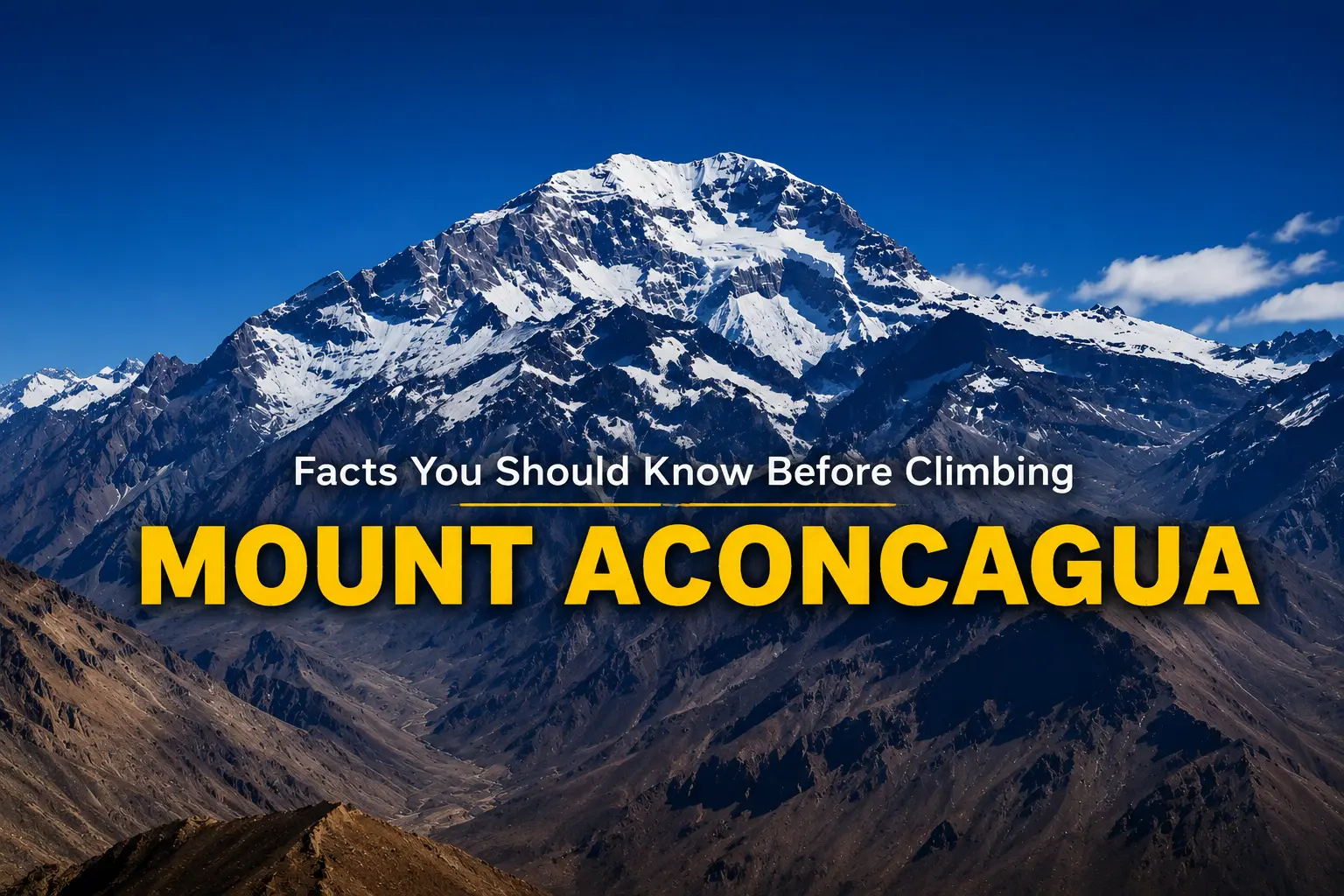 Standing at 6,961 metres (22,838 feet) above sea level, Mount Aconcagua is the highest mountain in both the Western Hemisphere and the Southern Hemisphere. Located in Argentina’s Andes, it attracts climbers from around the world who want to experience a major high-altitude expedition without the technical climbing demands of peaks such as K2 or Everest. Before planning an expedition, however, it is important to understand the mountain, its altitude, climate, routes, acclimatization requirements, and physical demands. These Mount Aconcagua Facts will help you understand what makes the mountain challenging and what preparation is required.
Mt Aconcagua Facts: Where Is the Mountain Located?
Aconcagua is located in the Mendoza Province of Argentina, close to the border with Chile. It forms part of the Andes mountain range and lies within Aconcagua Provincial Park.
Its location makes Mendoza the usual starting point for expeditions. Climbers generally travel from Mendoza toward the mountain before entering the park and beginning their approach.
The surrounding landscape is dramatically different from the lower valleys, with rocky terrain, glaciers, high-altitude camps, and extremely dry mountain conditions.
Mount Aconcagua Facts About Its Height
At approximately 6,961 metres, Aconcagua is the highest mountain outside Asia.
Its elevation is one of the biggest challenges for climbers. Even though many routes do not require advanced technical climbing skills, the extreme altitude can make relatively straightforward terrain physically demanding.
At nearly 7,000 metres, the air contains significantly less available oxygen than at sea level. This is why acclimatization is one of the most important parts of an Aconcagua expedition.
Mt Aconcagua Facts About Its Name
The origin of the name “Aconcagua” is debated, with several interpretations connected to Indigenous languages of the Andes.
Regardless of its exact linguistic origin, the mountain has become one of the most recognizable landmarks of the Argentine Andes and an important destination for mountaineers worldwide.
Facts About the Climbing Season
The main climbing season generally falls during the Southern Hemisphere summer, when mountain conditions are comparatively more suitable for expeditions.
The season typically runs from around November through March, although conditions can vary considerably from year to year.
January and February are commonly associated with the main climbing period. Even during the climbing season, however, climbers must be prepared for severe winds, freezing temperatures, snow, and rapidly changing weather.
Mt Aconcagua Facts About the Normal Route
The Normal Route is the most commonly used route on Aconcagua. It approaches the mountain from the northwest and generally does not involve the highly technical rock and ice climbing found on some other routes.
However, “Normal Route” does not mean easy.
The route involves prolonged exposure to high altitude, steep sections, cold conditions, and significant physical endurance. Proper acclimatization and preparation remain essential.
Mt Aconcagua Facts About the Polish Glacier Route
The Polish Glacier Route is another well-known climbing option. Compared with the Normal Route, it can involve more technical terrain, particularly around the glacier and upper sections.
Climbers considering this route should have appropriate mountaineering skills and experience, depending on the exact variation and current conditions.
For many climbers, the Normal Route is the more straightforward introduction to Aconcagua, while technical routes require additional expertise.
Mt Aconcagua Facts About Altitude and Acclimatization
Altitude is arguably the defining challenge of an Aconcagua expedition.
As climbers ascend, the body needs time to adapt to reduced oxygen availability. Moving upward too quickly can increase the risk of altitude-related illnesses.
A well-planned expedition therefore includes acclimatization rotations, rest days, gradual elevation gain, and careful monitoring of symptoms.
Headaches, nausea, unusual fatigue, dizziness, and difficulty sleeping can occur at altitude. Severe symptoms should never be ignored, and descent may become necessary.
Mount Aconcagua Facts About the Weather
Aconcagua is famous for its harsh mountain weather.
Strong winds can develop quickly, particularly at higher elevations. Temperatures can fall dramatically, and storms may create difficult climbing conditions even during the main season.
The mountain’s high-altitude environment means climbers should be prepared for:
- Freezing temperatures
- Powerful winds
- Snow and storms
- Strong solar radiation
- Rapid weather changes
- Very dry conditions
Weather forecasting and expedition decision-making are therefore critical.
Mount Aconcagua Facts About the Camps
Expeditions normally use a series of camps as climbers gradually move toward higher elevations.
Depending on the route and expedition strategy, commonly known locations include Plaza de Mulas, Camp Canada, Nido de Cóndores, Berlín, and Plaza Colera.
Plaza de Mulas is one of the major base-camp areas and is located at roughly 4,300 metres above sea level.
Higher camps are progressively more exposed and colder, making acclimatization and energy management increasingly important.
Mt Aconcagua Facts About the Summit Day
Summit day is usually the most demanding stage of the expedition.
A climber may spend many hours moving through high-altitude terrain while dealing with cold, wind, reduced oxygen, and accumulated fatigue.
The final ascent requires careful pacing. Climbers must balance their energy reserves with changing weather and the available daylight.
Reaching the summit is not simply about physical strength—it also requires patience, acclimatization, sound judgment, and the ability to turn around when conditions become unsafe.
Facts About Physical Preparation
You do not necessarily need to be an elite athlete to attempt Aconcagua, but you should arrive well prepared.
Training should focus on long-duration cardiovascular endurance, uphill walking, strength, and carrying a backpack.
Useful preparation can include:
- Long-distance hiking
- Stair or hill training
- Incline treadmill sessions
- Leg and core strength exercises
- Multi-day trekking
- Backpack training
Training at altitude, when safely and practically possible, can also help prepare you for the demands of high-altitude climbing.
Mt Aconcagua Facts About Technical Difficulty
One of the interesting aspects of Aconcagua is that its Normal Route is generally considered non-technical compared with many other 6,000–7,000-metre peaks.
However, this should not be confused with being easy.
The main challenges are altitude, endurance, weather, cold, and prolonged exposure. Conditions can also change the technical demands of the mountain.
Previous high-altitude trekking or mountaineering experience can be extremely valuable.
About Equipment
Proper equipment is essential because conditions near the summit can be extremely cold and windy.
Typical expedition equipment may include:
- Mountaineering boots
- Crampons
- Ice axe
- Trekking poles
- Helmet where required
- Four-season or expedition-rated clothing
- Down jacket
- Waterproof outer layers
- Warm gloves and mitts
- UV-protection sunglasses or glacier glasses
- High-SPF sunscreen
- Sleeping bag suitable for extreme cold
- Headlamp
- Backpack and expedition accessories
The exact equipment list depends on the route, season, expedition operator, and current mountain conditions.
Facts Every First-Time Climber Should Remember
Aconcagua offers an extraordinary high-altitude experience, but it should never be underestimated.
The mountain combines extreme elevation, unpredictable weather, long trekking days, cold temperatures, and demanding acclimatization.
Before attempting the climb, make sure you understand the route, train appropriately, use reliable equipment, plan adequate acclimatization days, and follow professional mountain guidance where appropriate.
Follow Us & Travel With Us
Get travel inspiration, exciting destinations, tour updates & special offers.
Frequently Asked Questions About Mount Aconcagua Facts
What is the height of Mount Aconcagua?
Mount Aconcagua is approximately 6,961 metres (22,838 feet) high. It is the highest mountain in both the Western Hemisphere and Southern Hemisphere.
Where is Mount Aconcagua located?
Mount Aconcagua is located in Mendoza Province, Argentina, in the Andes mountain range near the Chilean border. The mountain lies within Aconcagua Provincial Park.
Is Aconcagua difficult to climb?
Yes. Although the Normal Route is generally considered non-technical, Aconcagua is a serious high-altitude climb. The main challenges include extreme altitude, cold, strong winds, long climbing days, and the need for proper acclimatization.
What is the best time to climb Aconcagua?
The main climbing season is generally during the Southern Hemisphere summer, from November to March. January and February are commonly used for expeditions, although weather and mountain conditions can vary.
Do you need technical climbing experience for Aconcagua?
Technical climbing experience is not always required for the Normal Route, but previous high-altitude trekking or mountaineering experience is highly valuable. Other routes, such as the Polish Glacier Route, can require more advanced mountaineering skills.
How long does it take to climb Aconcagua?
A complete Aconcagua expedition commonly takes around 2–3 weeks, depending on the route, acclimatization schedule, weather, rest days, and expedition itinerary. The actual summit attempt is only one part of the overall expedition.
What are the biggest risks on Aconcagua?
The major risks include altitude sickness, severe weather, extreme cold, strong winds, dehydration, exhaustion, and rapidly changing mountain conditions. Proper acclimatization and careful decision-making are essential.
What equipment is needed to climb Aconcagua?
Climbers typically need suitable mountaineering boots, crampons, an ice axe, warm expedition clothing, a four-season sleeping bag, sunglasses or glacier glasses, sunscreen, gloves, a backpack, and other high-altitude equipment. The exact equipment depends on the route and conditions.
Can beginners climb Mount Aconcagua?
A physically fit climber with limited technical experience may be able to attempt the Normal Route with appropriate preparation and professional support. However, Aconcagua should not be treated as a beginner-level trek because of its extreme altitude and demanding conditions.
Why is Aconcagua famous?
Aconcagua is famous for being the highest mountain outside Asia and the highest peak in the Western and Southern Hemispheres. Its combination of extreme altitude and comparatively non-technical Normal Route makes it an important objective for high-altitude mountaineers.
Learn more about Mt Aconcagua–>
Final Thoughts
Understanding these Mount Aconcagua Facts is an important first step before planning an expedition.
Aconcagua may not require the same level of technical climbing as some of the world’s most difficult peaks, but its nearly 7,000-metre altitude makes it a serious mountaineering objective.
With thoughtful preparation, proper acclimatization, suitable equipment, and respect for the mountain environment, an Aconcagua expedition can become one of the most rewarding experiences in the Andes.
If you are considering climbing Aconcagua, research your route carefully and plan your expedition around weather, acclimatization, physical preparation, and safety rather than focusing only on reaching the summit.