Top 10 Popular Mountains in the World: Famous Peaks Every Traveler Should Know
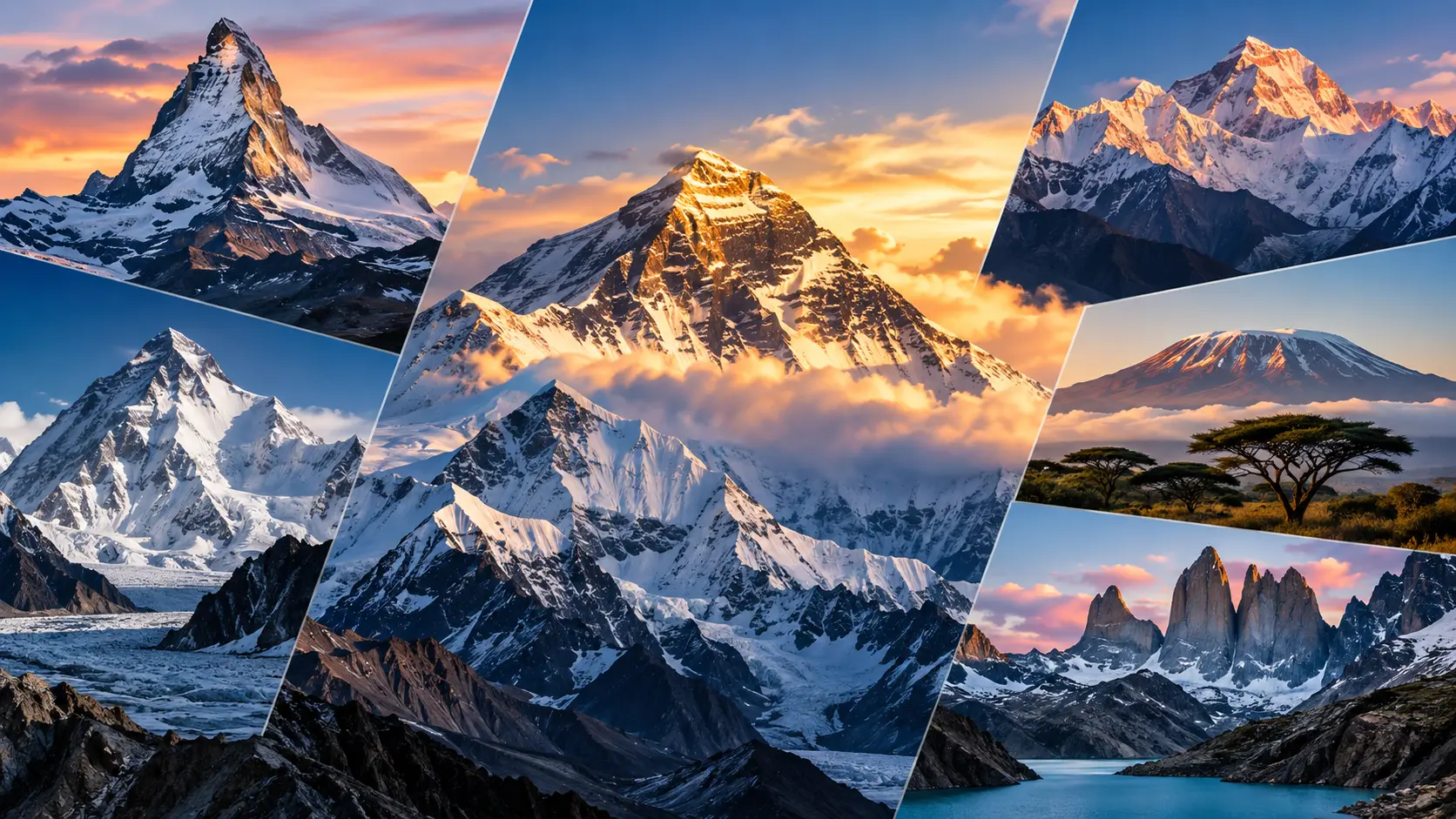 There is something timeless about a Popular Mountains. Long before modern maps, climbing equipment, satellite navigation, and adventure tourism, mountains stood as enormous landmarks on the horizon—silent, imposing, and seemingly impossible to conquer. Today, some of the world’s most spectacular peaks have become symbols of exploration, endurance, culture, and natural beauty.
From the legendary summit of Mount Everest to the dramatic pyramid of the Matterhorn, Popular Mountains attract climbers, trekkers, photographers, researchers, and travelers from every corner of the planet. Some are famous because they are among the highest mountains on Earth, while others became legendary because of their distinctive shapes, challenging routes, or cultural importance.
This guide explores the top 10 Popular Mountains in the world, their locations, heights, unique characteristics, and the stories that have made them famous.
What Makes Popular Mountains So Famous?
Mountain popularity is not determined by height alone. A relatively lower peak can be more recognizable than a much taller one because of its appearance, history, accessibility, or cultural significance.
For example, Mount Everest is globally recognized as the highest point on Earth above sea level, while the Matterhorn is famous for its almost perfectly shaped pyramidal summit. The Himalayas dominate the list of the world’s highest peaks, but mountains in Europe, Africa, South America, and North America have their own remarkable stories.
Many of these shave also become important destinations for adventure tourism. Their surrounding landscapes support local communities, tourism economies, wildlife habitats, and unique cultures.
Now, let’s explore ten of the world’s most famous mountain peaks.
1. Mount Everest – Nepal and China
Height: 8,848.86 metres
Mountain Range: Himalayas
Location: Nepal–China border
No list of the world’s most Popular Mountains would be complete without Mount Everest.
Known as Sagarmatha in Nepal and Qomolangma in Tibet, Everest rises along the border between Nepal and China. Its summit reaches 8,848.86 metres above sea level, according to the elevation jointly announced by Nepal and China in 2020.
But Everest is more than a number on a geography chart. For generations, it has represented the ultimate challenge of mountaineering.
The first confirmed successful ascent took place in 1953, when New Zealand mountaineer Edmund Hillary and Nepali Sherpa Tenzing Norgay reached the summit. Since then, thousands of climbers have attempted to follow their footsteps.
The mountain was created by the continuing collision of the Indian and Eurasian tectonic plates, a geological process that helped raise the Himalayas over millions of years.
For travelers who do not intend to climb the summit, the Everest region still offers spectacular trekking experiences, including the famous Everest Base Camp route.
Everest’s combination of extreme altitude, history, culture, and adventure has made it perhaps the most recognizable mountain on Earth.
2. K2 – Pakistan and China
Height: 8,611 metres
Mountain Range: Karakoram
Location: Pakistan–China border
If Everest represents the world’s highest summit, K2 represents something equally compelling: raw mountaineering difficulty.
Located in the Karakoram Range on the Pakistan-China border, K2 rises to approximately 8,611 metres. Its steep faces, unpredictable weather, exposed ridges, and technical climbing sections have earned it a formidable reputation among experienced mountaineers.
Unlike Everest, where established commercial climbing infrastructure exists on major routes, K2 has traditionally presented a more demanding challenge. The mountain’s enormous pyramid-like form makes it instantly recognizable.
K2 is also known by the nickname “Savage Mountain,” a reference to the serious risks associated with climbing it.
For visitors who never intend to climb the summit, the wider Karakoram region provides extraordinary scenery, including enormous glaciers, dramatic valleys, and some of the world’s most impressive high-altitude landscapes.
3. Kangchenjunga – Nepal and India
Height: 8,586 metres
Mountain Range: Himalayas
Location: Nepal–India border region
Standing at 8,586 metres, Kangchenjunga is the world’s third-highest mountain and one of the most magnificent peaks of the Himalayas.
The mountain lies along the border between Nepal and India’s Sikkim region. Its name is commonly associated with the meaning “Five Treasures of the High Snow,” referring to its five major peaks.
Kangchenjunga has a particularly strong cultural and spiritual importance in the surrounding region. The mountain is not simply viewed as a geographical feature but as a sacred landscape.
Its remote location and challenging terrain have helped preserve much of its wild character. Trekking in the Kangchenjunga region provides travelers with views of enormous glaciers, forests, remote villages, and high Himalayan valleys.
Among the world’s Popular Mountains, Kangchenjunga stands apart because it combines extraordinary altitude with deep cultural significance.
4. Lhotse – Nepal and China
Height: 8,516 metres
Mountain Range: Himalayas
Location: Nepal–China border
Lhotse rises to 8,516 metres and is located immediately south of Mount Everest.
The name Lhotse means “South Peak” in Tibetan, an appropriate description given its geographical relationship with Everest. The two mountains share part of the same climbing route toward the higher sections of the Everest massif before climbers take different routes toward their respective summits.
Lhotse’s massive south face is particularly famous among mountaineers. It is one of the largest and steepest mountain faces in the world, creating a serious technical challenge.
For trekkers visiting the Everest region, Lhotse frequently appears as part of the extraordinary Himalayan skyline. Its proximity to Everest means that travelers can experience several of the world’s highest peaks within the same journey.
5. Makalu – Nepal and China
Height: 8,485 metres
Mountain Range: Himalayas
Location: Nepal–China border
Makalu is one of the most visually striking Popular Mountains in the Himalayas.
At 8,485 metres, it is the fifth-highest mountain in the world. Its distinctive four-sided pyramid shape immediately separates it from many surrounding peaks.
Makalu lies in eastern Nepal near the border with Tibet. The region around the mountain is known for rugged terrain, remote settlements, glaciers, deep valleys, and spectacular Himalayan scenery.
Makalu is considered a technically demanding mountain because of its steep sections and exposed ridges. As a result, it generally attracts highly experienced mountaineers rather than casual climbers.
The Makalu-Barun region is also known for its rich biodiversity, making the journey interesting even for travelers whose goal is exploration rather than summit climbing.
6. Cho Oyu – Nepal and China
Height: 8,188 metres
Mountain Range: Himalayas
Location: Nepal–China border
Cho Oyu, rising to 8,188 metres, is the sixth-highest mountain in the world.
It stands near the Nangpa La pass between Nepal and Tibet and forms part of the spectacular Himalayan landscape. Compared with several other 8,000-metre peaks, Cho Oyu is often regarded as having a comparatively accessible standard climbing route.
That does not mean it is an easy mountain. At more than 8,000 metres, climbers still face extreme cold, thin air, unpredictable weather, altitude-related dangers, and demanding terrain.
The mountain’s broad snow-covered slopes and enormous Himalayan setting make it one of the most recognizable peaks in the region.
For geography enthusiasts, Cho Oyu is particularly interesting because it demonstrates how different climbing difficulty can be even among mountains with similar extreme elevations.
7. Dhaulagiri – Nepal
Height: 8,167 metres
Mountain Range: Himalayas
Location: Nepal
Dhaulagiri reaches approximately 8,167 metres and is the seventh-highest mountain in the world.
The name Dhaulagiri comes from Sanskrit-derived terms generally interpreted as “White Mountain.” The enormous peak dominates the landscape of north-central Nepal.
One of its most impressive characteristics is its enormous vertical rise above the surrounding Kali Gandaki Valley. The mountain’s dramatic relationship with the deep valley creates one of Nepal’s most extraordinary mountain landscapes.
The Dhaulagiri region is less crowded than the Everest trekking corridor, making it particularly appealing to travelers looking for remote Himalayan scenery.
Its glaciers, high passes, traditional villages, and rugged terrain create a sense of wilderness that has become increasingly valuable in modern adventure travel.
8. Manaslu – Nepal
Height: 8,163 metres
Mountain Range: Himalayas
Location: Nepal
Manaslu stands at approximately 8,163 metres and is the eighth-highest mountain on Earth.
Its name is connected to the Sanskrit word “Manasa,” often interpreted in relation to the spirit or intellect. The mountain has a distinctive presence in Nepal’s Gorkha region and is surrounded by spectacular valleys and traditional Himalayan communities.
The Manaslu Circuit has become increasingly popular among trekkers seeking a high-altitude adventure away from some of Nepal’s busiest trekking routes.
One of the great attractions of the region is the transition in landscapes. Travelers can move from lush lower valleys through alpine forests and remote villages before reaching dramatically high mountain terrain.
This combination of cultural immersion and spectacular scenery makes Manaslu one of the most fascinating Popular Mountains for adventure travelers.
9. Nanga Parbat – Pakistan
Height: 8,126 metres
Mountain Range: Himalayas
Location: Gilgit-Baltistan, Pakistan
Nanga Parbat rises to 8,126 metres in Pakistan’s Gilgit-Baltistan region.
Its name is generally translated from Sanskrit as “Naked Mountain,” reflecting the mountain’s enormous exposed appearance. It is also famously associated with the nickname “Killer Mountain,” referring to the severe risks historically faced by climbers.
The mountain is particularly famous for its enormous Rupal Face, one of the world’s highest mountain faces.
Nanga Parbat’s scenery extends far beyond the summit itself. The surrounding region features dramatic valleys, glaciers, rivers, and high-altitude landscapes characteristic of the western Himalayas.
For photographers and adventure travelers, Nanga Parbat offers an extraordinary combination of scale, isolation, and rugged beauty.
10. Annapurna I – Nepal
Height: 8,091 metres
Mountain Range: Himalayas
Location: Nepal
Annapurna I completes our journey through the world’s most Popular Mountains.
At 8,091 metres, Annapurna I is the tenth-highest mountain in the world. However, its importance in mountaineering history extends well beyond its ranking.
Annapurna I became the first mountain above 8,000 metres to be successfully climbed. French climbers Maurice Herzog and Louis Lachenal reached the summit in 1950, an achievement that marked a major moment in the history of Himalayan exploration.
Today, the wider Annapurna region is one of Nepal’s best-known trekking destinations. The famous Annapurna Circuit passes through an extraordinary variety of environments, from subtropical valleys to high mountain passes.
The appeal of Annapurna is therefore not limited to mountaineers. Trekkers can experience local communities, traditional villages, changing ecosystems, rivers, forests, and immense Himalayan views during a single journey.
Why These Popular Mountains Continue to Fascinate the World
The stories behind these peaks reveal something important about mountain travel: height is only one part of the experience.
Everest represents the world’s highest summit above sea level. K2 represents technical difficulty and remote adventure. Kangchenjunga carries deep cultural significance. The Annapurna region combines mountain scenery with some of Nepal’s most famous trekking routes.
Together, these peaks demonstrate why Popular Mountains continue to attract people even in an age when satellite imagery can show us almost every corner of the planet.
There is still something fundamentally different about seeing a mountain in person.
A photograph can show the summit, but it cannot fully communicate the scale of a Himalayan valley. A map can show elevation, but it cannot reproduce the sound of wind moving through a high mountain pass. And statistics can tell us how high a peak is, but they cannot explain why people continue to travel thousands of kilometres simply to stand beneath it.
Follow Us & Travel With Us
Get travel inspiration, exciting destinations, tour updates & special offers.
Are the World’s Most Popular Mountains All in the Himalayas?
No. Although the Himalayas contain many of the world’s highest peaks, some of the most famous mountains are located elsewhere.
The Matterhorn in Switzerland and Italy is one of Europe’s most recognizable mountains because of its dramatic pyramid-shaped summit. Mount Kilimanjaro in Tanzania is Africa’s highest mountain and is famous for its isolated volcanic form. Denali in Alaska is the highest mountain in North America and is renowned for its enormous vertical relief and harsh environment.
This shows that mountain popularity is influenced by far more than altitude. Accessibility, history, landscape, culture, climbing achievements, photography, and tourism all contribute to a mountain’s global reputation.
Frequently Asked Questions
What is the most popular mountain in the world?
Mount Everest is arguably the world’s most internationally recognized mountain. It is the highest point on Earth above sea level and has become a global symbol of exploration and mountaineering. Its official elevation jointly announced by Nepal and China is 8,848.86 metres.
Which is the highest mountain in the world?
Mount Everest is the highest mountain above sea level, with an officially announced elevation of 8,848.86 metres.
What are the top 10 highest mountains?
The ten mountains discussed in this article—Everest, K2, Kangchenjunga, Lhotse, Makalu, Cho Oyu, Dhaulagiri, Manaslu, Nanga Parbat, and Annapurna I—are the world’s ten highest mountains by elevation above sea level.
Which mountain is the hardest to climb?
There is no single universally accepted answer because climbing difficulty depends on route, weather, season, technical terrain, altitude, and other conditions. K2 is widely regarded as one of the most technically demanding major peaks, while mountains such as Annapurna I and Nanga Parbat also have challenging climbing histories.
Which Popular Mountains can tourists visit without climbing?
Many famous mountains can be experienced without attempting their summits. Everest Base Camp, the Annapurna Circuit, the Manaslu region, and trekking areas around several Himalayan peaks allow travelers to experience spectacular mountain environments without undertaking a technical summit expedition.
Final Thoughts
The world’s great mountains are more than measurements on a map. They are landscapes shaped by tectonic forces, cultures built around sacred peaks, communities supported by mountain tourism, and destinations that continue to inspire generations of explorers.
From the towering summit of Everest to the dramatic slopes of K2 and the cultural landscapes surrounding Kangchenjunga and Annapurna, these Popular Mountains tell different stories while sharing one extraordinary quality: they make us look upward.
And perhaps that is why mountains remain so powerful.
They remind us that even in a world filled with technology, instant communication, and satellite maps, there are still places where nature sets the terms—and where reaching the horizon can become an adventure of a lifetime.