DAY 01: ARRIVE DELHI
Arrive Delhi Airport Welcome to India- a country where hospitality is a way of life; to a culture steeped in tradition, a land where history lives in music and dance. You will be received at the airport in a traditional manner with garlands. Transfer to hotel for check in. overnight stay in hotel.
DAY 02: DELHI - LEH (3,524 M)
Today early Morning, we will transfer you to the Delhi airport to board flight to Leh. Arrive Leh and check-in hotel. Rest of the day at leisure. Overnight stay at Hotel in Leh.
Meals: Breakfast + Lunch + Dinner
DAY 03: LEH
Morning after breakfast, We will take you to a hike for Shanti Stupa and Leh Palace. Rest of the day free for acclimatization and Shopping in Leh.
Evening you can walk down to the nearest market on your own or spend some time at leisure.
Overnight at the hotel.
Meals: Breakfast + Lunch + Dinner
DAY 4: LEH – CHILLING – MARKHA (3,700 M)
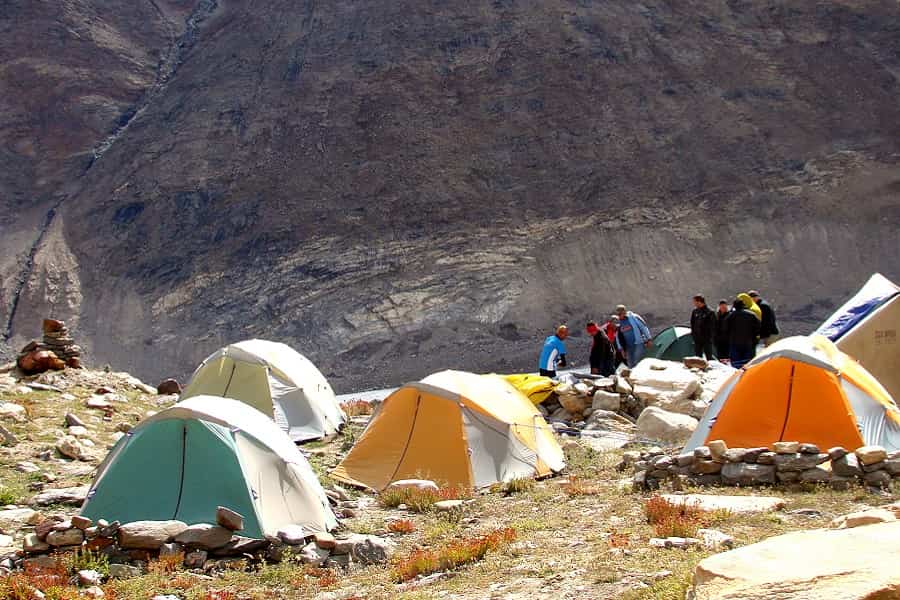
After breakfast, drive to Chilling, Cross the Zanskar river and follow the trail to Markha valley, drive before Markha Village and trek up to the village, Markha is the largest village in the valley with around 20 households. Upon arrival set up the camp. We can also visit an old monastery nearby in the evening.
Meals: Breakfast + Lunch + Dinner
DAY 5: MARKHA – THACHUNGTSE (4010 M)
Today after breakfast trek to Thachungtse. We shall be a crossing river and come across Hankar en route to Thochuntse. Hankar is the highest village in Markha Valley. If the weather is good, we can see Mt. Kang Yaze today. Dinner and overnight stay in tent at Thachungtse.
Meals: Breakfast + Lunch + Dinner
DAY 6: THACHUNGTSE – BASECAMP ( 5200M)
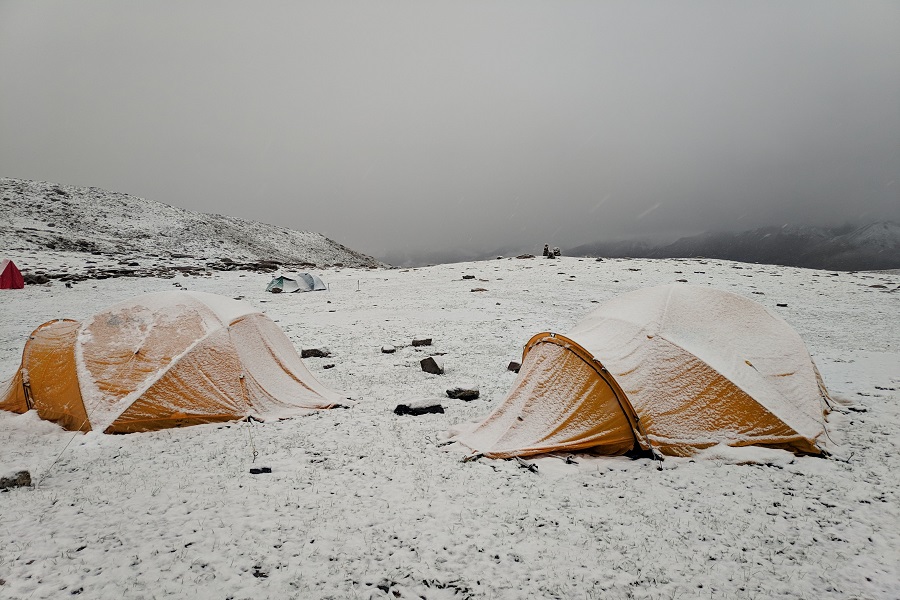
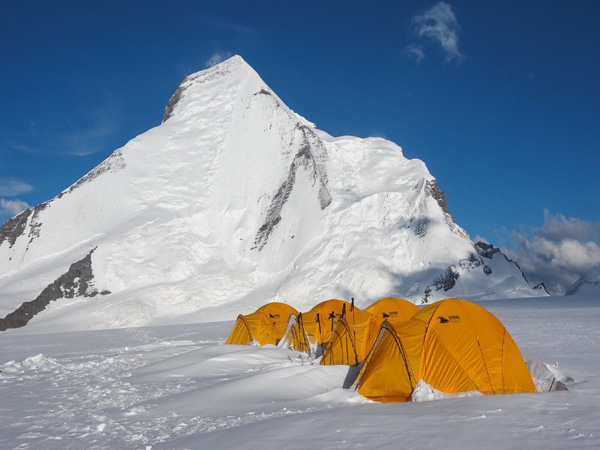
After breakfast start your trek to Base Camp (5200M). We will be crossing a number of gentle slopes and a chain of glassy ridges of Nimaling place with green pasture where during summers, you can spot thousands of sheep, goats, yaks grazing and prayer walls. Upon arrival set up the base camp for overnight stay.
Meals: Breakfast + Lunch + Dinner
DAY 7: BASE CAMP (Acclimatisation Day)
Today is an Acclimatisation day You will go for an Acclimatisation hike and back to base camp for an overnight stay.
Meals: Breakfast + Lunch + Dinner
DAY 8: BASE CAMP – SUMMIT KANG YETSE II - BASE CAMP
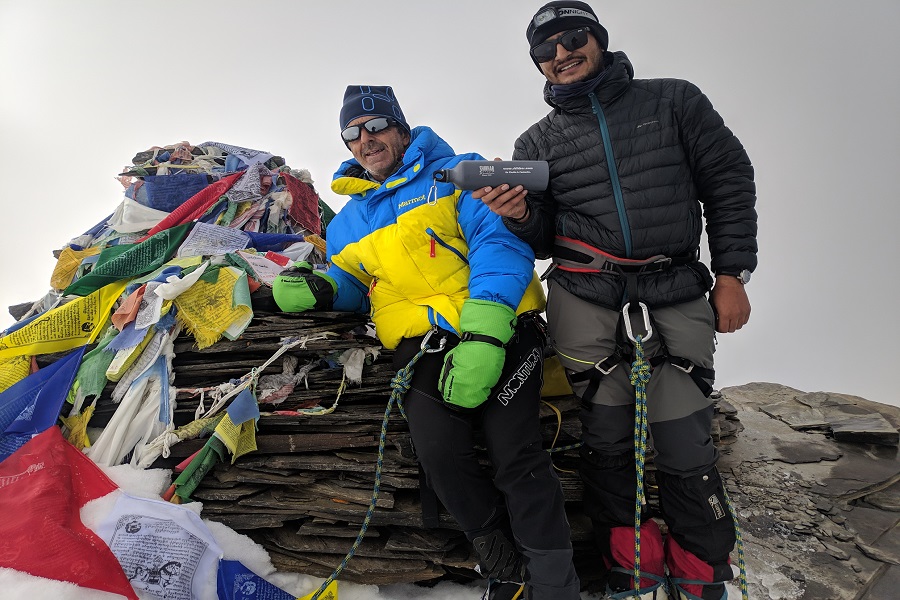
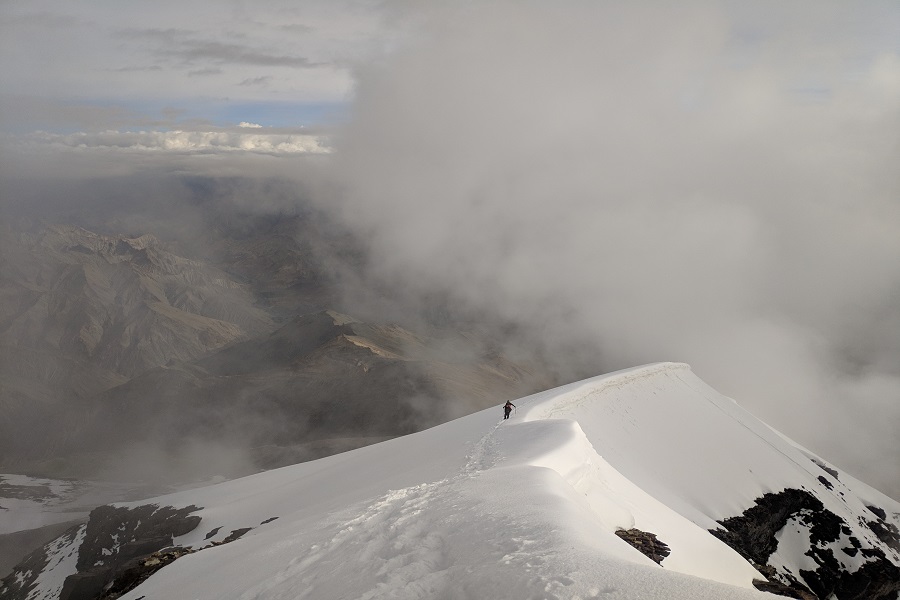
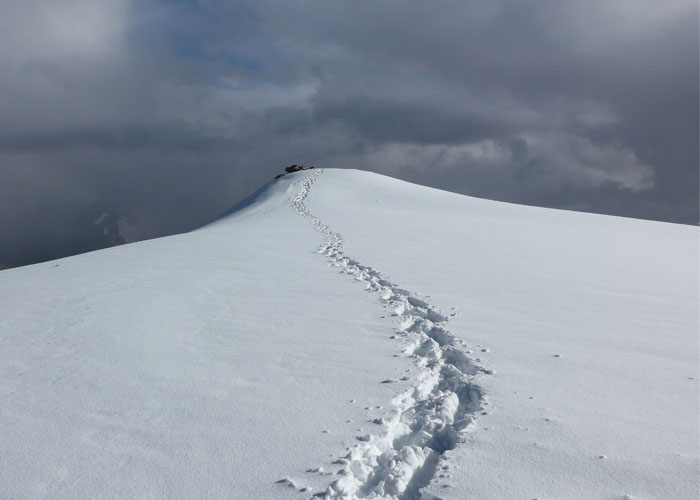
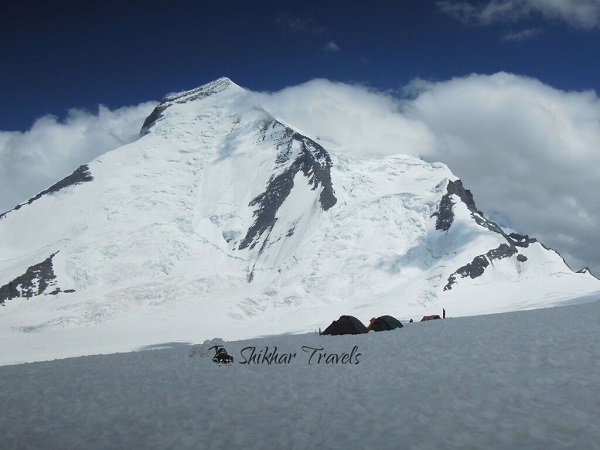
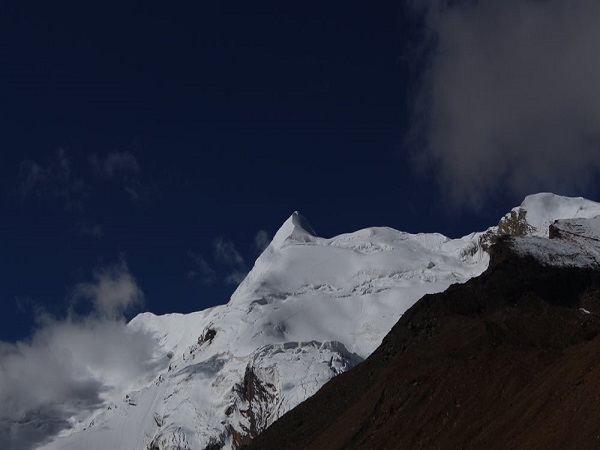
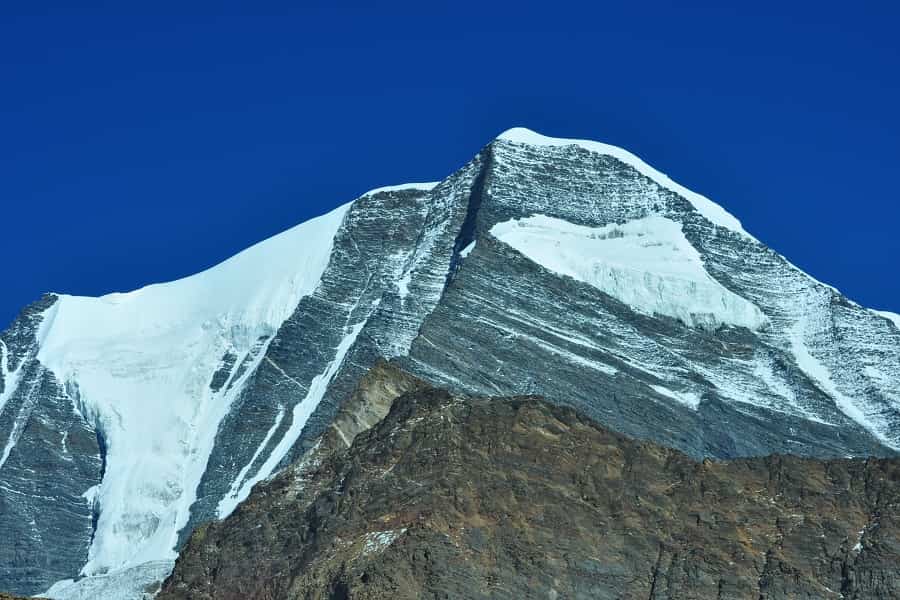
Very early in the morning proceed to summit Mt Kang Yestse (6250 M). From the summit, you will have a beautiful view of the Zanskar range and the distant Karakoram. Descend to Base Camp for an overnight stay in camp.
Meals: Breakfast + Lunch + Dinner
DAY 9: RESERVE DAY FOR SUMMIT
Reserve day for a summit in case of bad weather. Overnight stay in base camp.
Note: If guests have successfully summited the peak on day 08, we will trek to Chakdo village on day 09 and stay in tents in Chakdo village.
Meals: Breakfast + Lunch + Dinner
DAY 10: BASE CAMP – CHAKDO - LEH
Today we will trek back to Kangmaru La (5260m) via Nimaling, from Kangmaru La trek down to Chakdo village and board in the waiting vehicles, and drive to Leh. Upon arrival check-in the hotel for an overnight stay.
Meals: Breakfast + Lunch + Dinner
Day 11: Leh – Delhi
Morning check out from hotel and transfer to Leh airport to catch the flight to your onwards destionation
Meals: Breakfast
WHY CHOOSE KANG YATSE II?
Your First 6,000m Summit
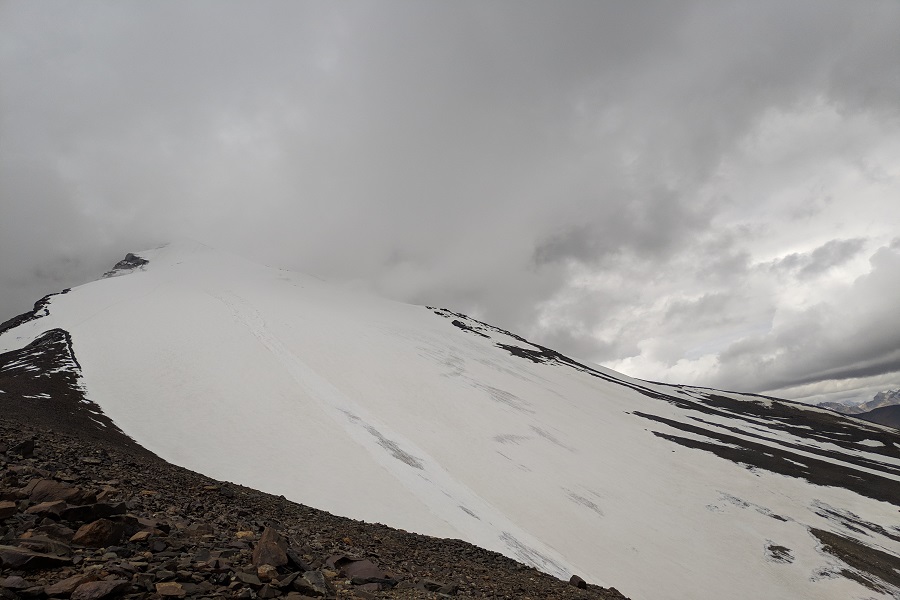
Kang Yatse II is widely regarded as the best first 6,000-metre summit in the Indian Himalaya. The non-technical nature of the climb means you can experience genuine high-altitude mountaineering summit push under starlight, crampon walking, glacier terrain without the extreme technical demands of more advanced peaks. It is the ideal stepping stone for climbers aspiring to 7,000m peaks like Mount Nun.
The Markha Valley Trek
The approach trek through the Markha Valley is an iconic journey in its own right. Many adventure companies offer the Markha Valley Trek as a standalone product. With Kang Yatse II, you get the full valley experience plus a summit two adventures in one expedition.
Hemis National Park & Wildlife
The entire trek route passes through Hemis National Park, India's largest national park and home to extraordinary high-altitude wildlife. Blue sheep (bharal) are commonly spotted on steep cliffs around Nimaling. Marmots pop up from burrows across the meadows. Golden eagles, lammergeier vultures, and Himalayan griffon vultures soar overhead. If exceptionally lucky, trekkers may spot the rare snow leopard.
Cultural Immersion in Ladakhi Villages
The trail passes through traditional Ladakhi settlements including Skiu, Markha, and Hankar. Whitewashed mud houses, ancient monasteries, mani stones inscribed with Buddhist mantras, fluttering prayer flags, and barley fields create a living museum of Ladakhi culture. The Sangam Point where the turquoise Zanskar River meets the muddy Indus is one of Ladakh's most photographed sights.
360 Degree Summit Views
The summit of Kang Yatse II offers one of the most spectacular panoramas in Ladakh. The entire Zanskar Range stretches to the west, the Ladakh Range frames the north, and on clear days, the distant Karakoram peaks including K2, Broad Peak, and the Gasherbrum massif are visible on the far northern horizon. Sunrise from near the summit is an unforgettable experience.
Kongmaru La Pass Crossing
The return route crosses Kongmaru La (5,260m), a high-altitude pass draped in prayer flags with fierce winds and panoramic views of both Kang Yatse peaks and the surrounding mountains. The descent through deep gorges with colourful rock formations and water crossings adds a dramatic final chapter to the expedition.
PREREQUISITES & EXPERIENCE REQUIRE
Kang Yatse II is not suitable for beginners or first-time high-altitude trekkers. The combination of altitude (6,250m), duration (11 days), distance (80-85 km), and a demanding summit push requires specific experience and fitness.
Minimum Experience Required
Prior experience of at least one high-altitude trek above 4,500 metres. Recommended prior treks include Roopkund, Hampta Pass, Pin Parvati, Kashmir Great Lakes, Stok Kangri, Friendship Peak, or any equivalent trek involving multi-day camping at altitude. Experience with basic mountaineering gear (crampons, ice axe) is helpful but not mandatory training is provided at base camp.
Physical Fitness Benchmarks
Ability to jog 5 km in 25-30 minutes consistently. Ability to trek for 6-8 hours per day on consecutive days with a daypack. Strong leg and core strength (squats, lunges, planks). Practice hiking with a loaded backpack (10-15 kg) on inclines. A structured fitness routine of at least 2-3 months before the expedition is strongly recommended.
Age Requirements
Minimum age: 16 years (minors aged 16-17 must be accompanied by a parent or guardian). Climbers above 60 years must provide a medical certificate confirming fitness for high-altitude trekking activities.
Medical Requirements
A signed medical certificate confirming fitness for high-altitude activities. No history of serious cardiac, respiratory, or neurological conditions. Pulse rate at rest between 60-100 bpm. Blood pressure within normal range (diastolic 75-85, systolic 100-130 mm Hg). Disclosure of any ongoing medications or conditions before departure.
SAFETY, RISKS & MEDICAL SUPPORT
Known Risks
Acute Mountain Sickness (AMS) is the primary risk. Symptoms can appear above 3,500m — the expedition starts acclimatizing in Leh at 3,524m. The summit at 6,250m places climbers in a zone where oxygen is roughly 55% of sea level. Dehydration is a constant concern in Ladakh's extremely dry climate. River crossings during the Markha Valley trek can be unpredictable depending on snowmelt and recent weather. Summit day involves walking on scree, moraine, and snow in darkness, with fatigue and cold as additional factors.
Shikhar's Safety Provisions
Experienced mountain guide and support staff with high-altitude experience. First aid medical kit with high-altitude emergency medicines. Oxygen cylinder available at base camp for emergencies. Daily health monitoring by the expedition leader. Technical equipment (crampons, ice axes, ropes) provided and inspected before summit day. Complete training session at base camp before the summit attempt. Communication equipment for emergency contact.
Emergency & Rescue
In case of altitude sickness or medical emergency, immediate descent is the primary protocol. Road rescue from Chakdo to Leh (nearest hospital). Helicopter evacuation possible in extreme emergencies (weather permitting). All participants must carry personal insurance covering high-altitude trekking up to 6,500m, helicopter rescue/air evacuation (minimum USD 6,000 coverage), and emergency medical expenses.
GEAR & EQUIPMENT
What Shikhar Provides
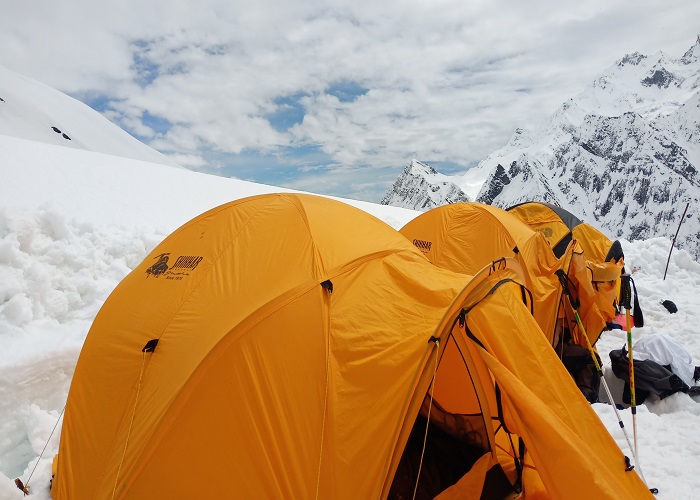
Common climbing equipment: climbing ropes, carabiners, ice pitons, snow bars, high altitude gas cartridges. Complete kitchen and camp equipment up to base camp. Tents (twin sharing during trek, shared at base camp). First aid kit with oxygen cylinder. Porter/pony service for member luggage (25 kg per person) between road head and base camp.
What You Need to Bring
Clothing: Layering system moisture-wicking base layer, fleece/down mid layer, waterproof outer shell (jacket and pants). Thermal body warmer (upper and lower). Warm waterproof gloves (2 pairs). Balaclava, woolen cap, sun shielding hat. UV sunglasses (Category 3-4 with wrap-around fit).
Footwear: High-ankle waterproof trekking boots with good grip. Camp slippers for rest stops.
Essentials: Rucksack (50-60 litres) with rain cover. Daypack (20-30 litres) for summit day. Headlamp with spare batteries (essential for summit night). 2 water bottles (1 litre each) plus thermos flask. Small lunch box. Trekking pole (at least one). Personal toiletries, sunscreen SPF 50+, lip balm. Personal medical kit. Energy bars, dry fruits, electrolyte sachets.
NOTE: Only BSNL postpaid SIM cards work reliably in Ladakh. Prepaid connections stop working upon entering the region. Mobile network is available in Leh and Kargil but NOT during the trek until Kongmaru La pass.
HOW TO REACH
By Air (Included in Shikhar Package)
Fly to Kushok Bakula Rimpochee Airport, Leh (IXL). Direct flights from Delhi (1.5 hours), with connections from Mumbai, Srinagar, Jammu, and Chandigarh. Shikhar's expedition includes Delhi-Leh-Delhi airfare — this is a significant inclusion that most competitors charge separately.
By Road
Manali to Leh Highway (500 km, open June-September) via Baralacha La, Lachalung La, and Tanglang La. Srinagar to Leh Highway (450 km, open May-October) via Zoji La, Lamayuru, and Kargil. Road travel takes 2 days minimum.
Foreign Nationals
Fill a Foreigner Registration Form at Leh Airport upon arrival. Carry passport, valid Indian visa, and 2 photocopies of each.
WEATHER & BEST TIME
Climbing season: July through September. Ladakh sits in a rain-shadow zone, receiving minimal monsoon rainfall while other Himalayan regions experience heavy precipitation.
Temperature Expectations
Markha Valley (3,500-4,000m): Daytime 10-20°C, Night 0-5°C. Very hot and dry during the day with harsh sun.
Nimaling/Base Camp (4,800-5,200m): Daytime 5-10°C, Night -5 to -10°C. Windy and cold. Layering is essential.
Summit (6,250m): Below -10°C during the midnight summit push. Wind chill can make it feel significantly colder. Proper down insulation and windproof layers are critical.