Mount Kenya Trekking & Peak Climbing Guide itinerary
Day 1: Sirimon Gate to Old Moses Camp (3,300m)
Your Mount Kenya adventure begins at Sirimon Gate (2,650m) after registration and briefing with your guide. The trail starts through montane forest, gradually ascending through giant heather and moorland vegetation. You'll spot unique flora including giant groundsels and lobelias as you trek for approximately 3-4 hours covering 9 kilometers. The gentle gradient makes this perfect for initial acclimatization. Upon arrival at Old Moses Camp, enjoy lunch and spend the afternoon exploring the surrounding area. The evening offers stunning views of the peaks above as you settle in for your first night on the mountain.
Day 2: Old Moses Camp to Shipton's Camp (4,200m)
Today is your longest trekking day, covering approximately 17 kilometers over 6-7 hours. After breakfast, ascend through the Mackinder's Valley, crossing the beautiful Ontulili River and traversing the scenic Liki North Valley. The landscape transforms dramatically as you gain altitude, with expansive moorlands and rocky terrain replacing the vegetation below. You'll pass the junction to Mackinder's Camp before continuing to Shipton's Camp, strategically positioned beneath the towering peaks of Batian and Nelion. The thinner air at this altitude makes the pace slower, but the spectacular mountain views provide constant motivation. Rest well tonight as acclimatization continues.
Day 3: Acclimatization Day at Shipton's Camp
This crucial rest day significantly improves your summit chances by allowing your body to adjust to the altitude. After a leisurely breakfast, embark on an acclimatization hike to either Hausberg Col (4,600m) or the area around Kami Hut, spending 3-4 hours at higher elevation before returning to Shipton's for lunch. This "climb high, sleep low" strategy helps reduce the risk of altitude sickness. The afternoon is free to relax, hydrate thoroughly, and prepare your gear for the summit attempt. Your guide will brief you on the next day's route and provide tips for the journey ahead. Use this time to rest, as the coming days will be physically demanding.
Day 4: Shipton's Camp to Mackinder's Camp (4,200m)
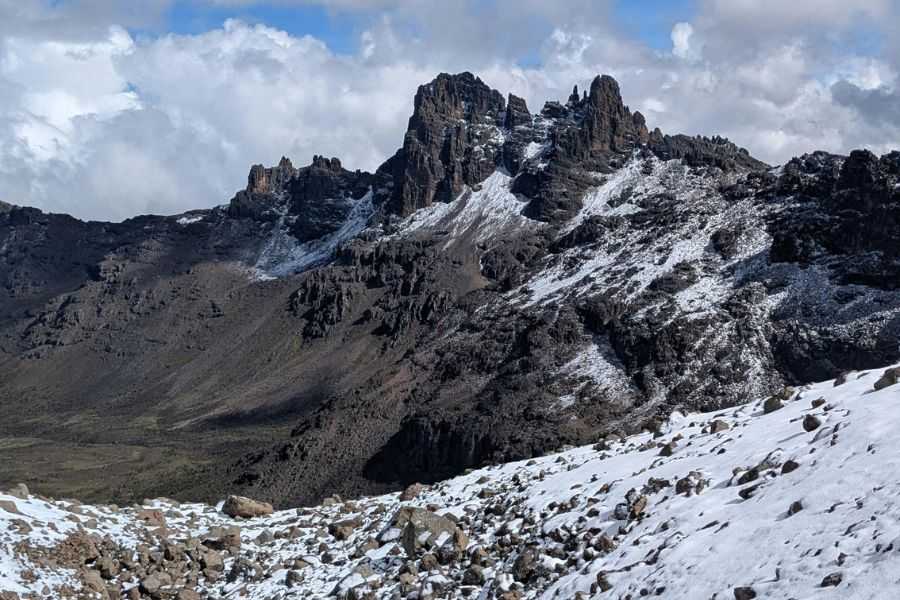
Today's trek takes you around the mountain to Mackinder's Camp via a scenic traverse route. The 5-6 hour journey covers approximately 12 kilometers through the stunning alpine desert landscape. You'll traverse beneath the dramatic rock faces and spires of Mount Kenya's central peaks, with opportunities to view the Lewis Glacier if weather permits. The trail passes through the Hausberg Valley with its unique rock formations and scattered tarns reflecting the mountain peaks. Mackinder's Camp sits in a valley below Point Lenana, positioning you perfectly for tomorrow's pre-dawn summit attempt. After settling in, enjoy an early dinner and prepare your summit gear. Your guide will wake you around 2:30-3:00 AM, so aim for an early bedtime to maximize rest before the challenging summit push.
Day 5: Summit Point Lenana (4,985m) and Descend to Met Station (3,050m)
Summit day begins in the early hours around 3:00 AM with a light breakfast and hot tea. Equipped with headlamps, you'll begin the steep 2-3 hour ascent to Point Lenana in darkness, navigating scree slopes and rocky sections. The cold pre-dawn air can drop below freezing, making warm layers essential. Timing your arrival for sunrise around 6:30 AM rewards you with spectacular views as the sun illuminates the glaciers of Batian and Nelion peaks, with the possibility of seeing both the Indian Ocean and Lake Victoria on exceptionally clear days. After celebrating at Africa's third-highest accessible peak and capturing photos, descend back to Mackinder's Camp for a hot breakfast. The long descent continues down the Naro Moru route through the Teleki Valley, passing vertical bog sections that can be muddy and challenging. You'll lose nearly 2,000 meters of elevation over 6-7 hours before reaching Met Station for your final night on the mountain, where warmer temperatures and thicker air provide welcome relief.
Day 6: Met Station to Naro Moru Gate (2,400m)
Your final day on Mount Kenya is a leisurely 3-4 hour descent through lush montane forest covering approximately 10 kilometers. The trail winds downward through dense bamboo groves where you might spot black and white colobus monkeys, buffalo, or various bird species. The gradual descent is easy on the legs after yesterday's exertion, allowing time to reflect on your achievement. Upon reaching Naro Moru Gate, complete park formalities and receive your summit certificate as proof of conquering Point Lenana. Transportation awaits to take you back to Nairobi or your next destination, carrying unforgettable memories of your Mount Kenya trekking experience. Most trekkers arrive back in Nairobi by late afternoon, tired but elated from their mountain adventure.
Mount Kenya Trekking - FAQs
Q: How high is Mount Kenya?
A: Mount Kenya's highest peak (Batian) is 5,199m, while Point Lenana (trekkers' summit) is 4,985m.
Q: Do I need climbing experience?
A: No technical climbing experience needed for Point Lenana, but good fitness is essential.
Q: What's the best time to climb Mount Kenya?
A: January-February and August-September offer the driest and clearest conditions.
Q: How difficult is Mount Kenya trekking?
A: Moderate to challenging due to altitude and distance; fitness and acclimatization are key.
Q: Can I trek Mount Kenya without a guide?
A: No, a licensed guide is mandatory for all Mount Kenya treks.
Q: How many days does it take to climb Mount Kenya?
A: Typically 4-6 days, with 5-6 days recommended for better acclimatization.
Q: Which is the best route to climb Mount Kenya?
A: Sirimon-Chogoria or Sirimon-Naro Moru routes offer the best scenery and acclimatization.
Q: What is the shortest route to Point Lenana?
A: Naro Moru route is the shortest but steepest option, typically 4 days.
Q: Do I need a permit to climb Mount Kenya?
A: Yes, park entry permits are mandatory and arranged through tour operators or at park gates.
Q: What gear do I need?
A: Warm layers, waterproof jacket, sleeping bag (-10°C rated), hiking boots, and trekking poles.
Q: Can I rent equipment in Kenya?
A: Yes, sleeping bags, trekking poles, and some clothing can be rented in Nairobi or Nanyuki.
Q: Can I climb during rainy season?
A: Yes, but trails are muddier, views obscured, and success rates lower.
Tour Highlight
✓ Africa's Second Highest Peak - Summit Point Lenana at 4,985 meters
✓ 360° Mountain Vistas - Gaze at Batian and Nelion peaks towering above
✓ Unique Ecosystem - Experience one of Africa's most diverse mountain environments
✓ Non-Technical Summit - Reach the peak without ropes or climbing equipment
✓ UNESCO World Heritage Site - Explore a globally recognized natural wonder
✓ Stunning Mountain Lakes - Discover pristine tarns and glacial lakes
✓ Unique Afro-Alpine Flora - See giant groundsels, lobelias, and rare plant species